Habitats
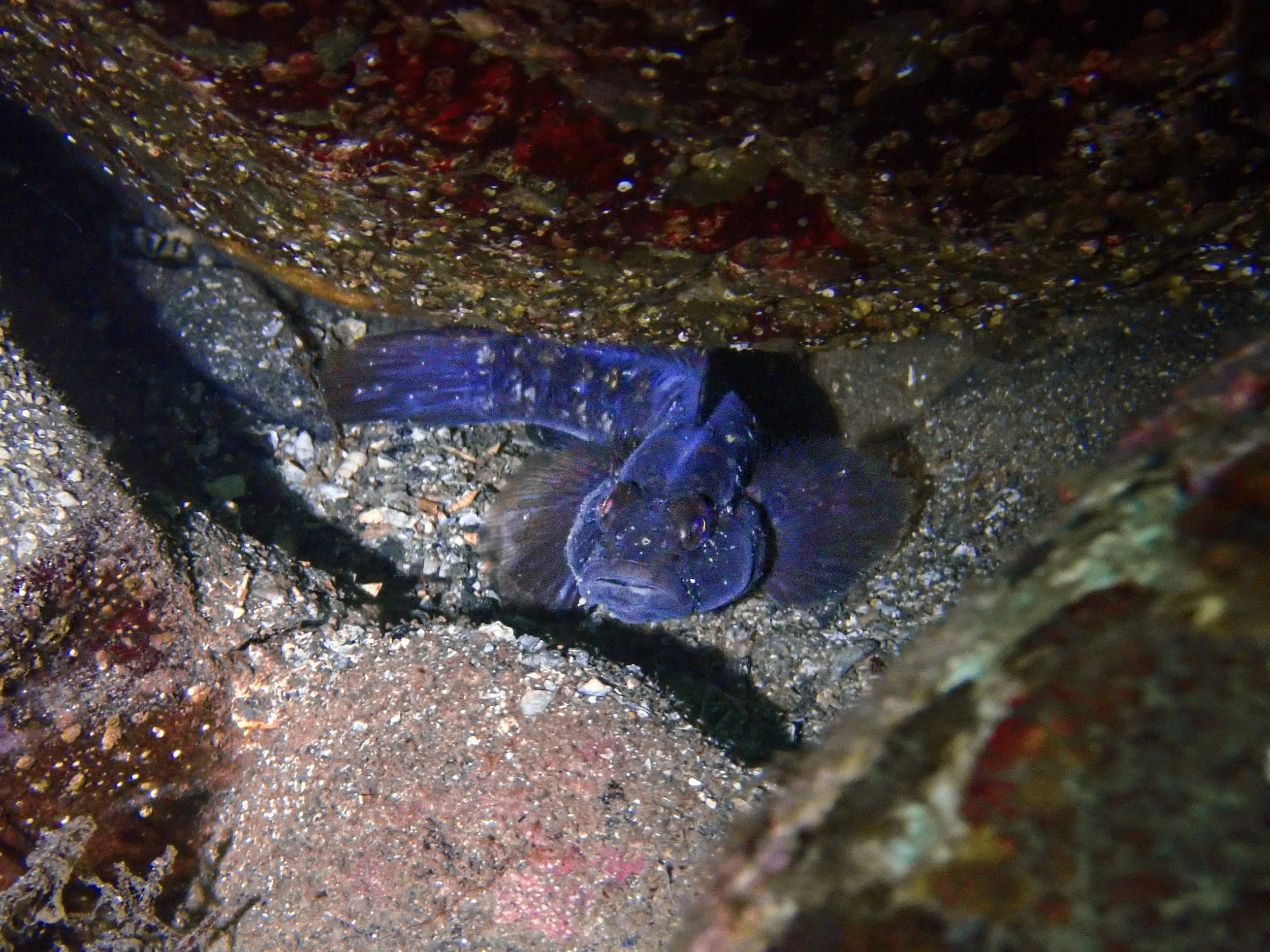
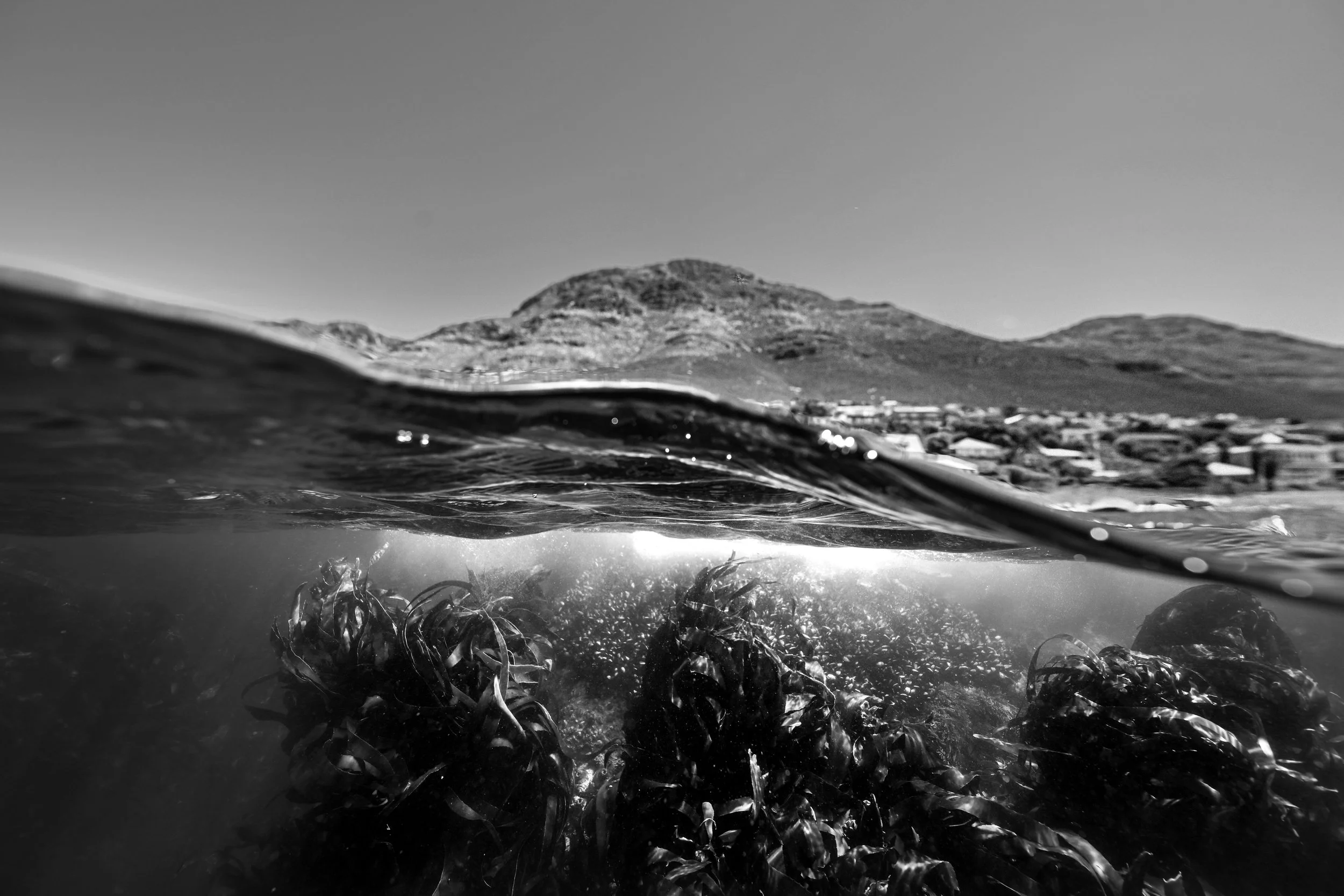
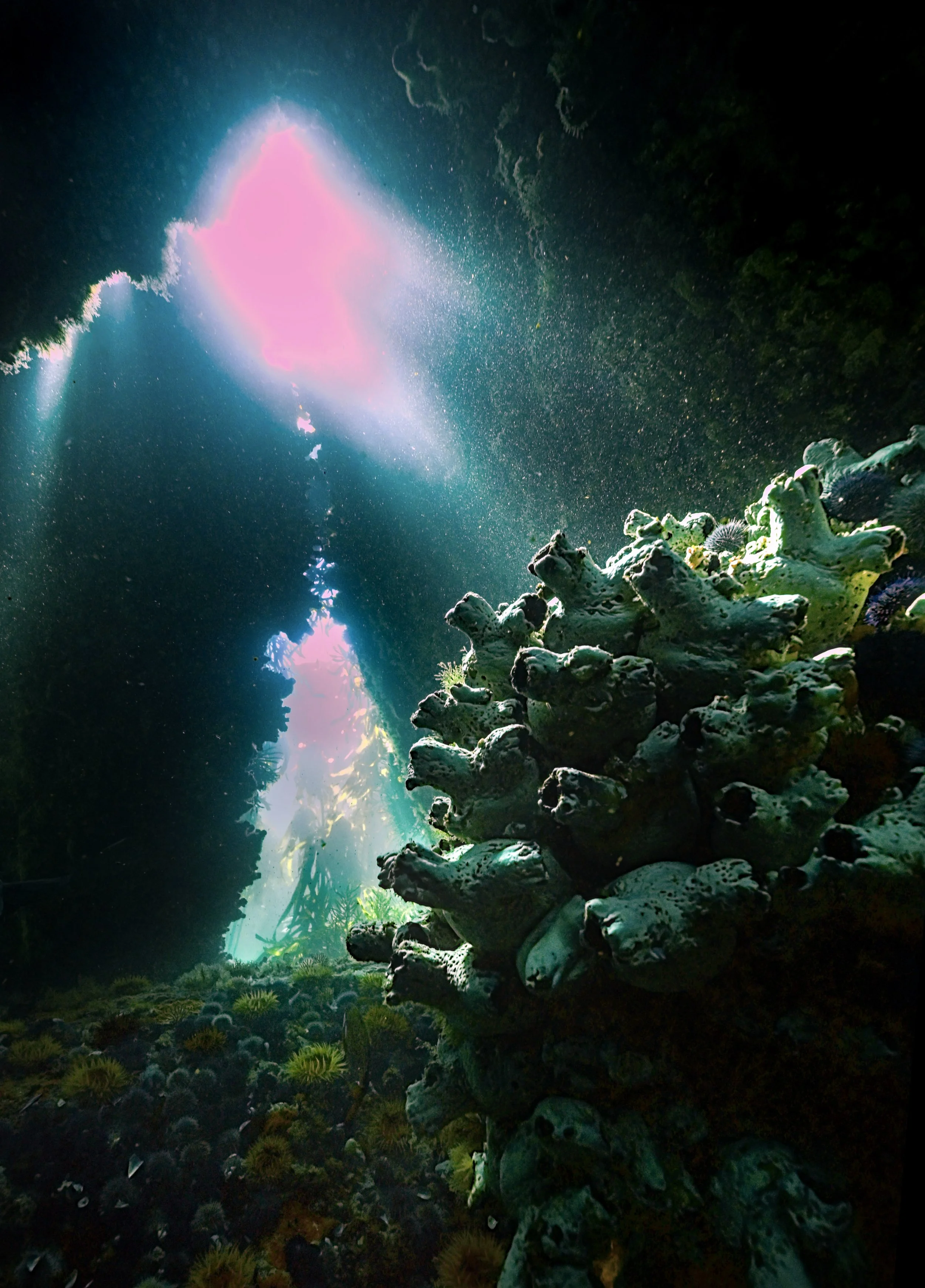
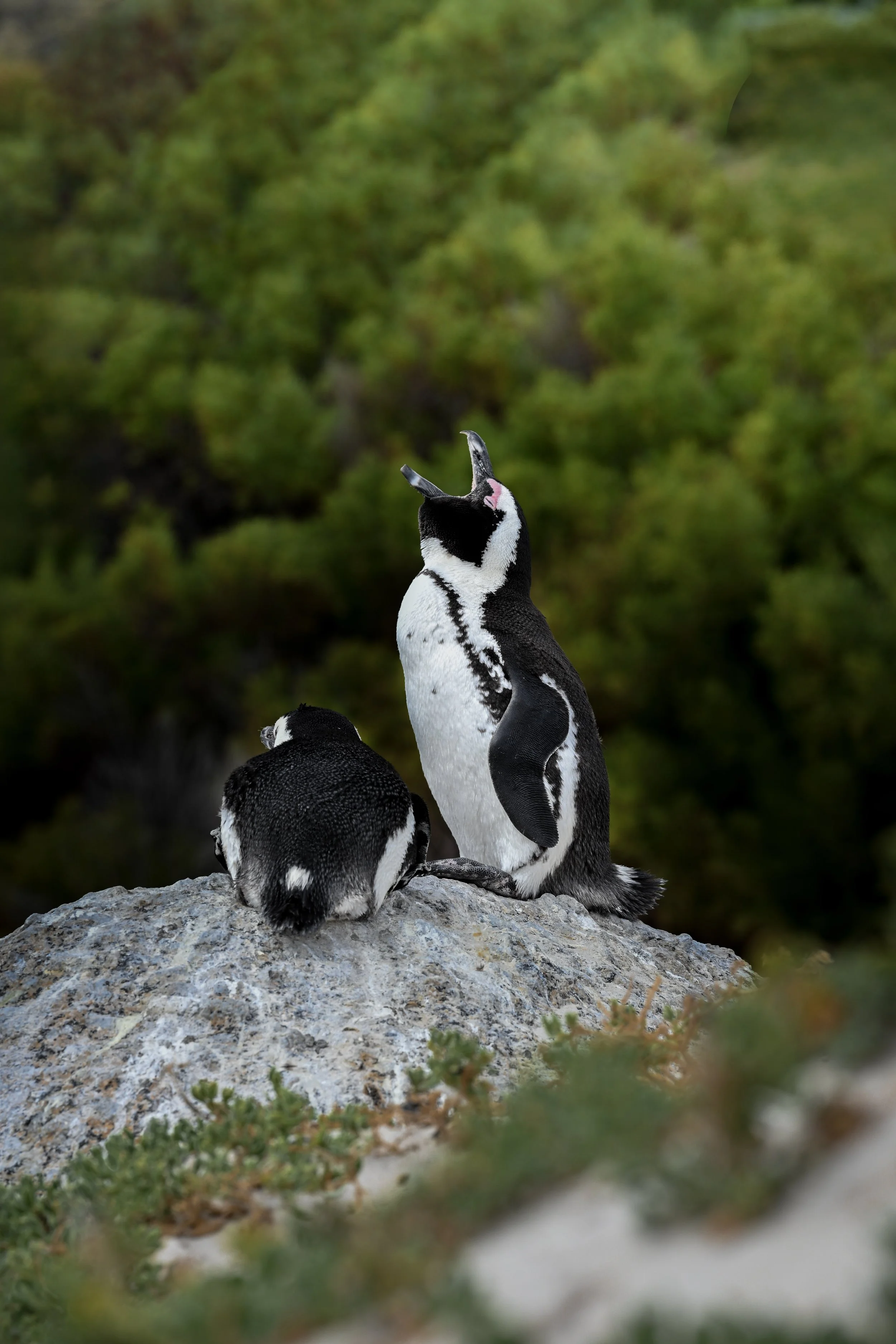
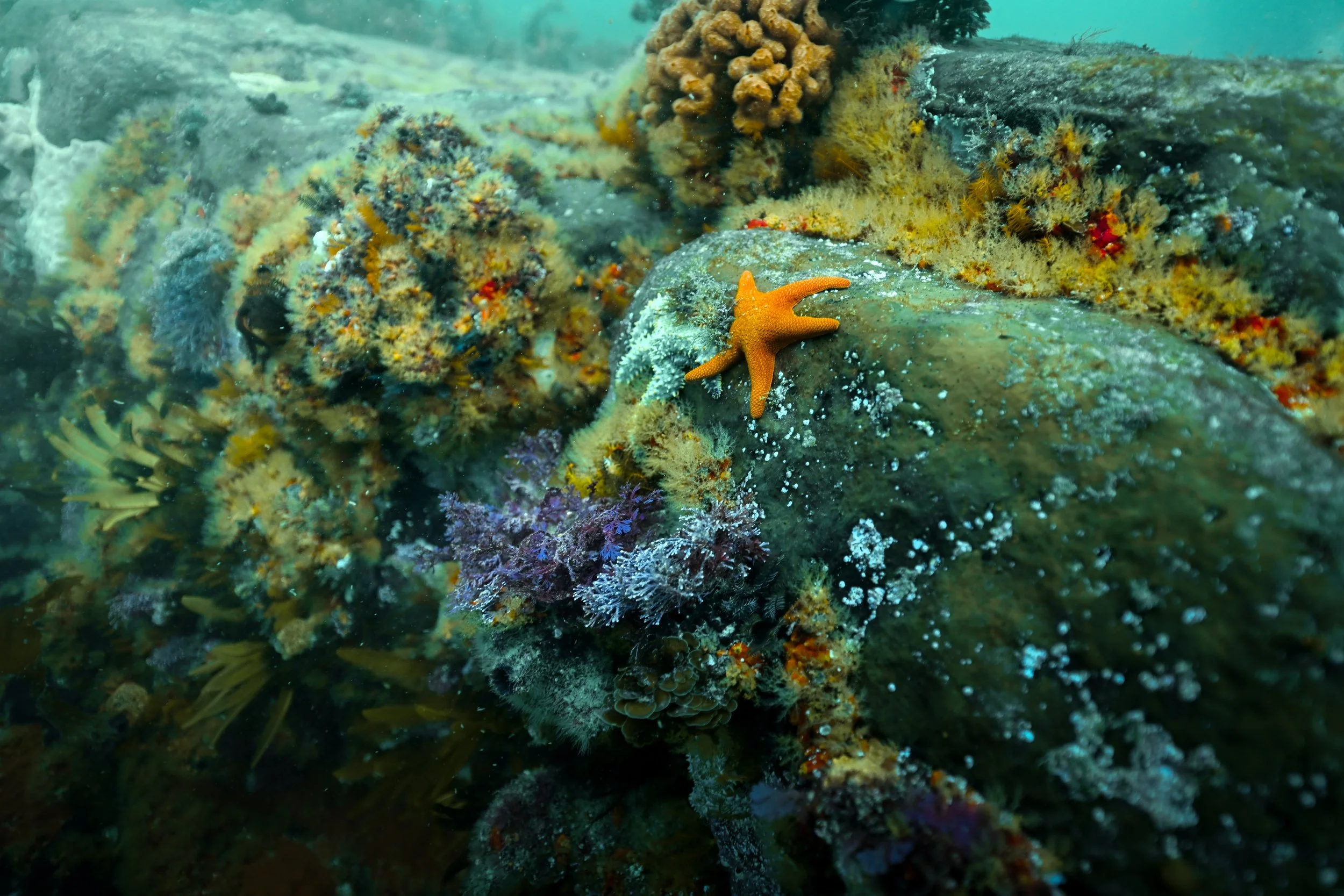
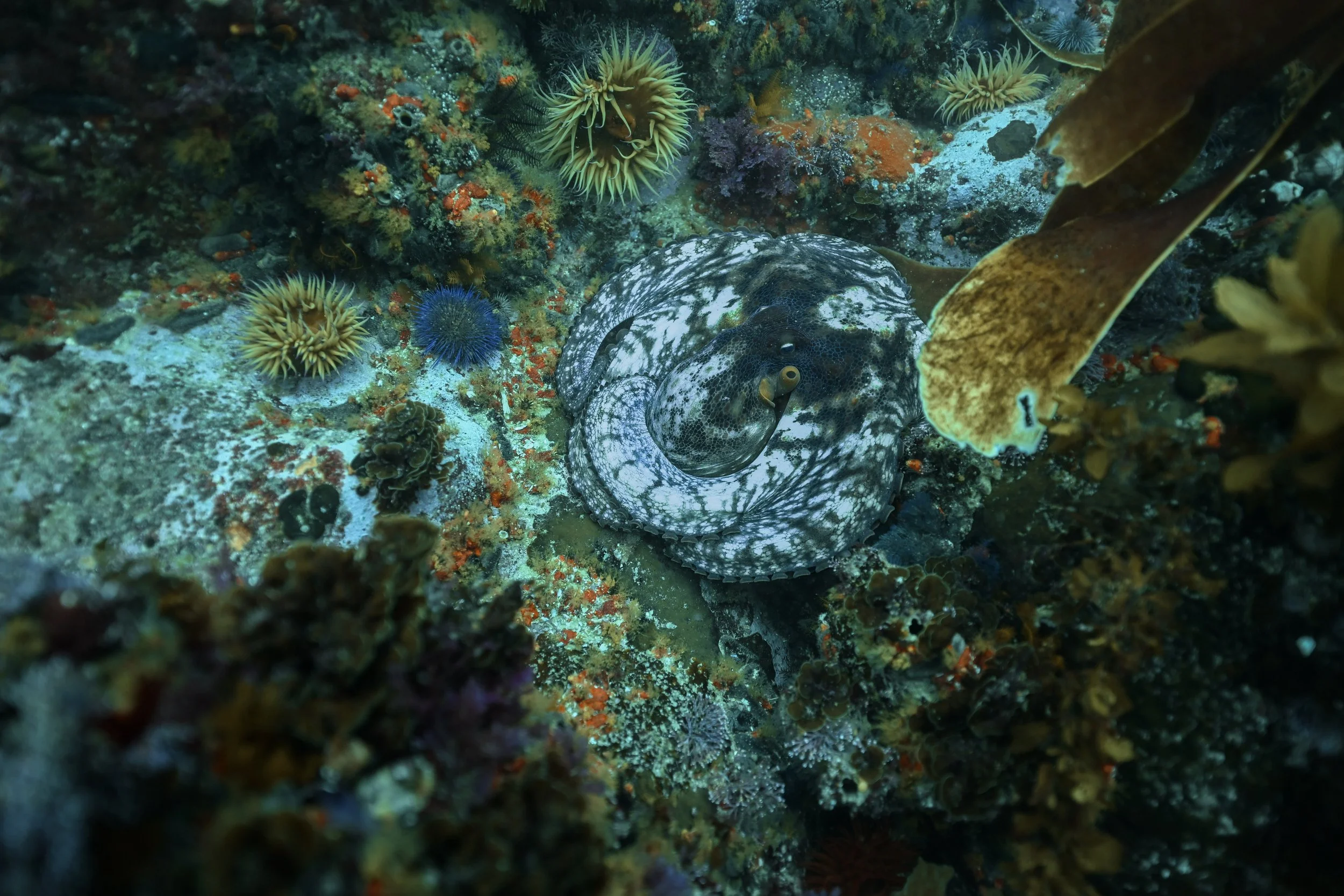
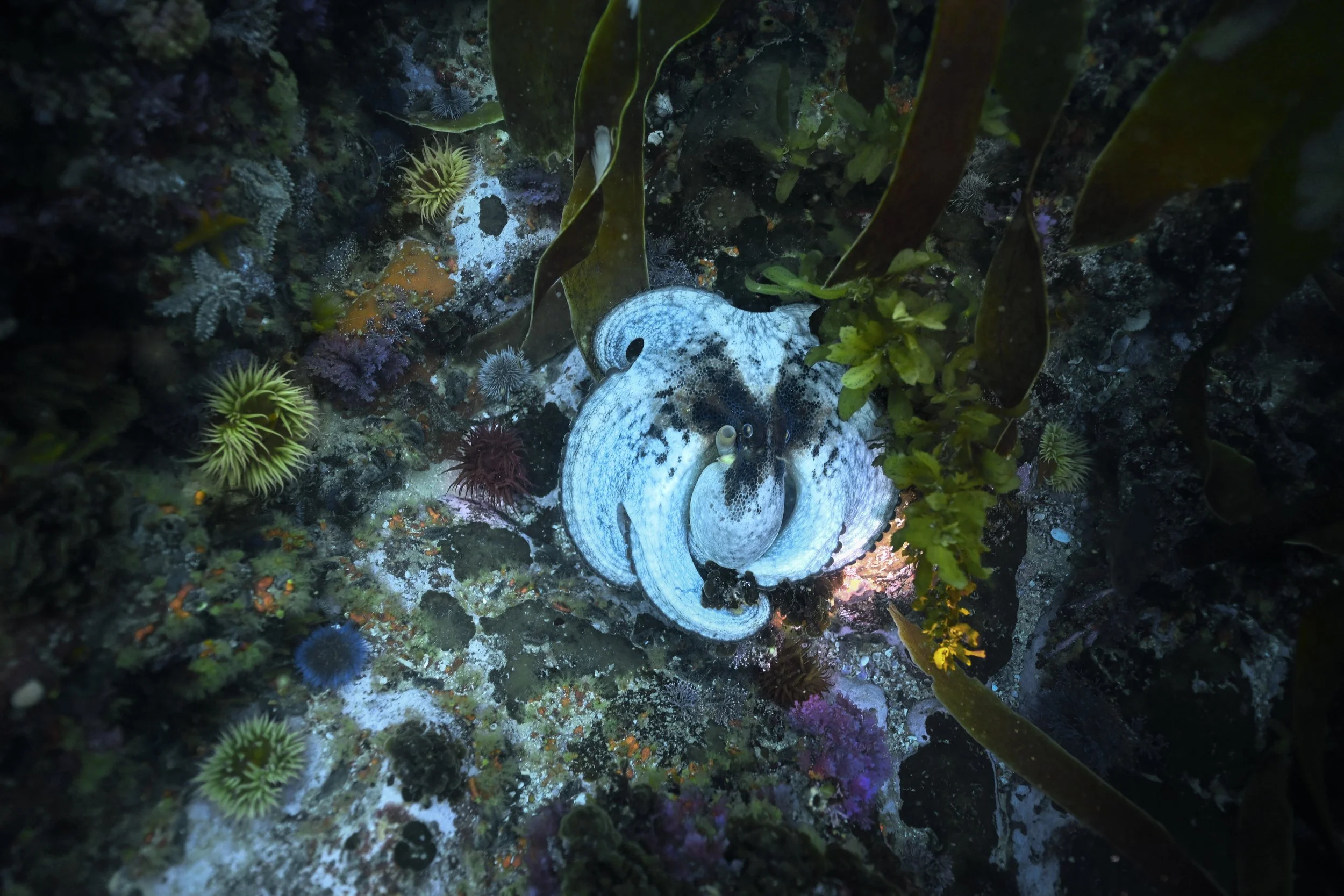
Before the animals, there is the place that holds them. These are the underwater worlds I keep returning to: sunlit kelp forests off the Atlantic coast of South Africa, cold reefs crowded with algae, anemones and urchins, and the still, dark waters of the Nordic fjords.
I have spent so many days in these places, learning to read their light, their currents and their small details. As a chemist, I'm drawn to how delicate each balance is, and how quickly it can change.
Kelp forest
A forest made of water
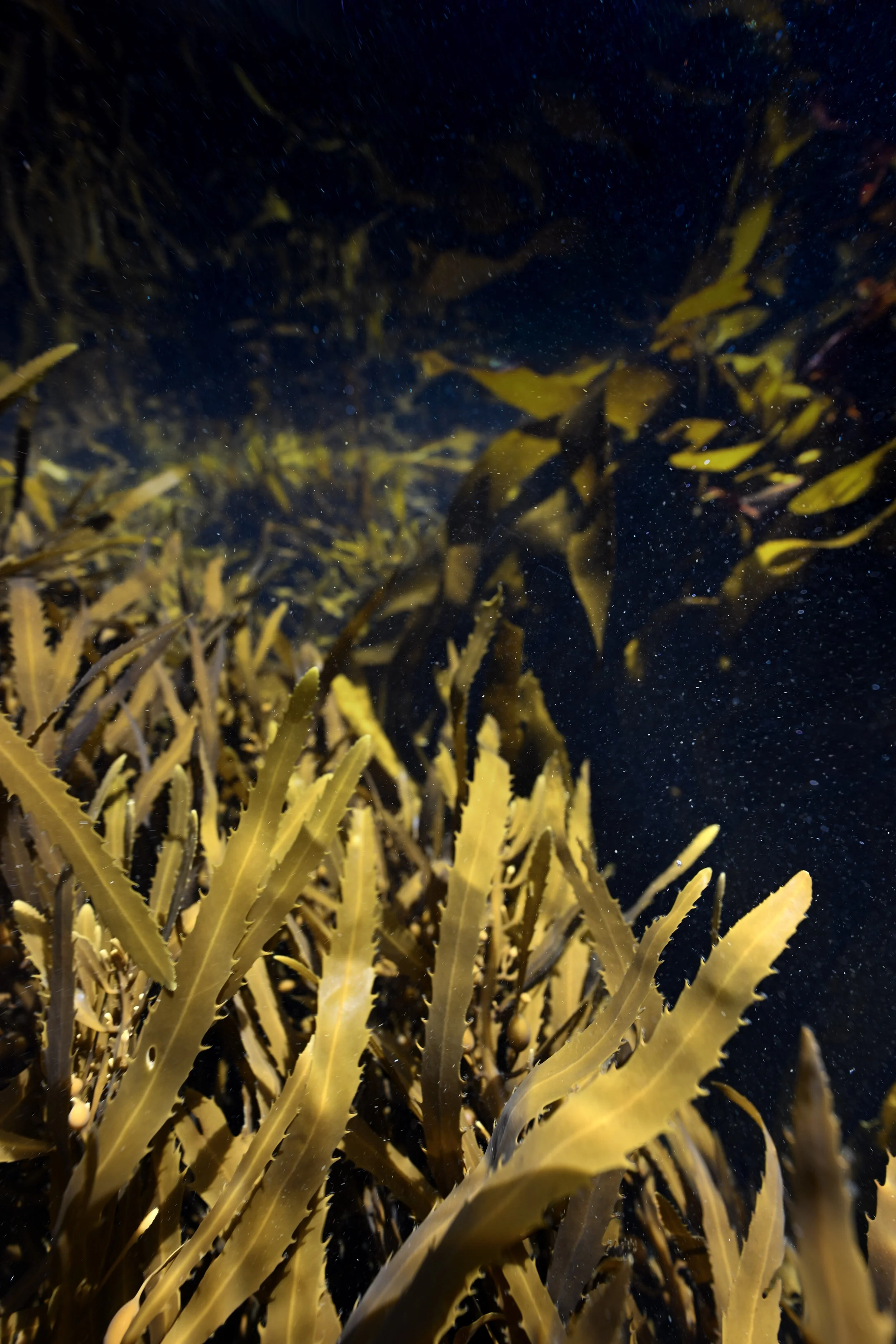
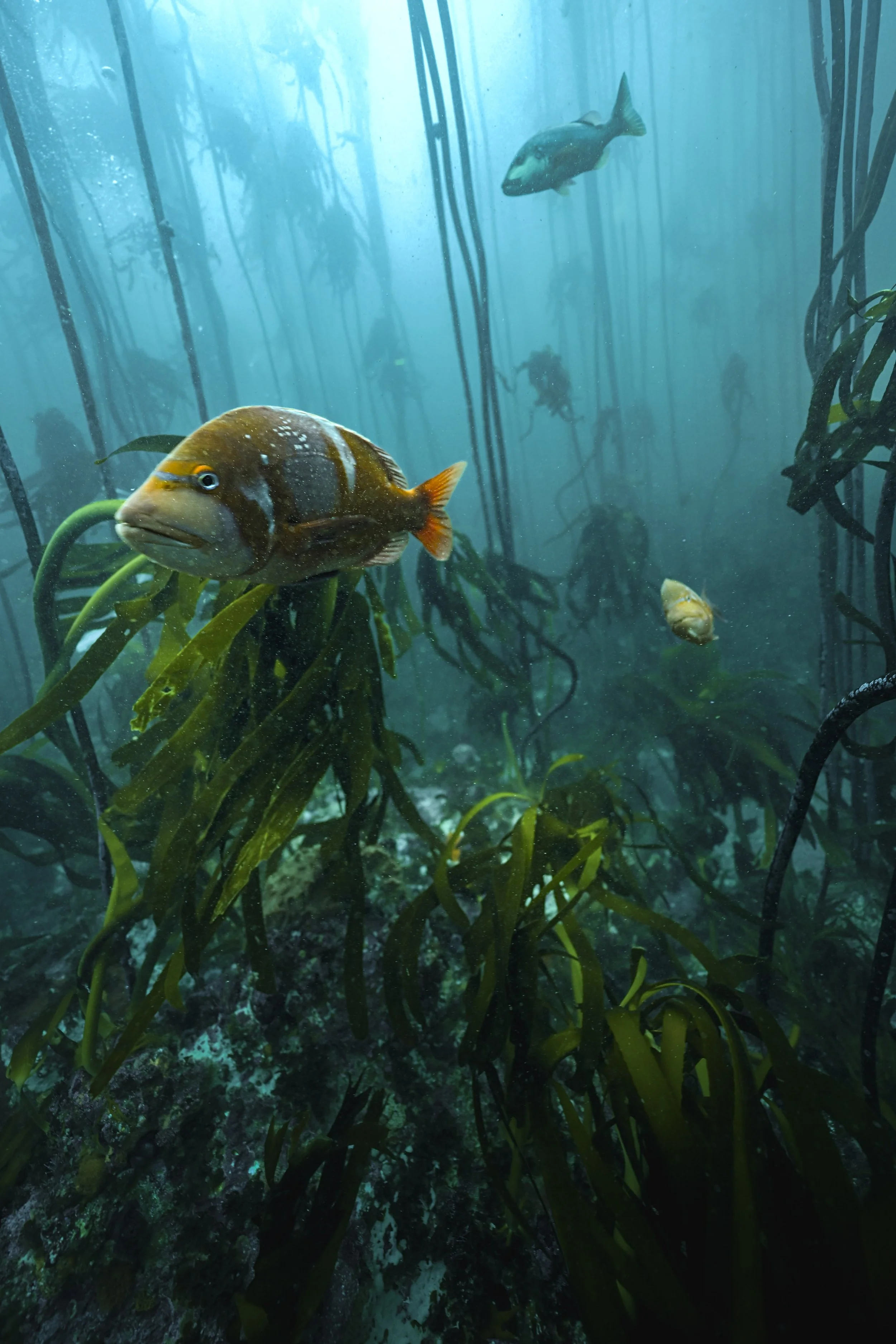
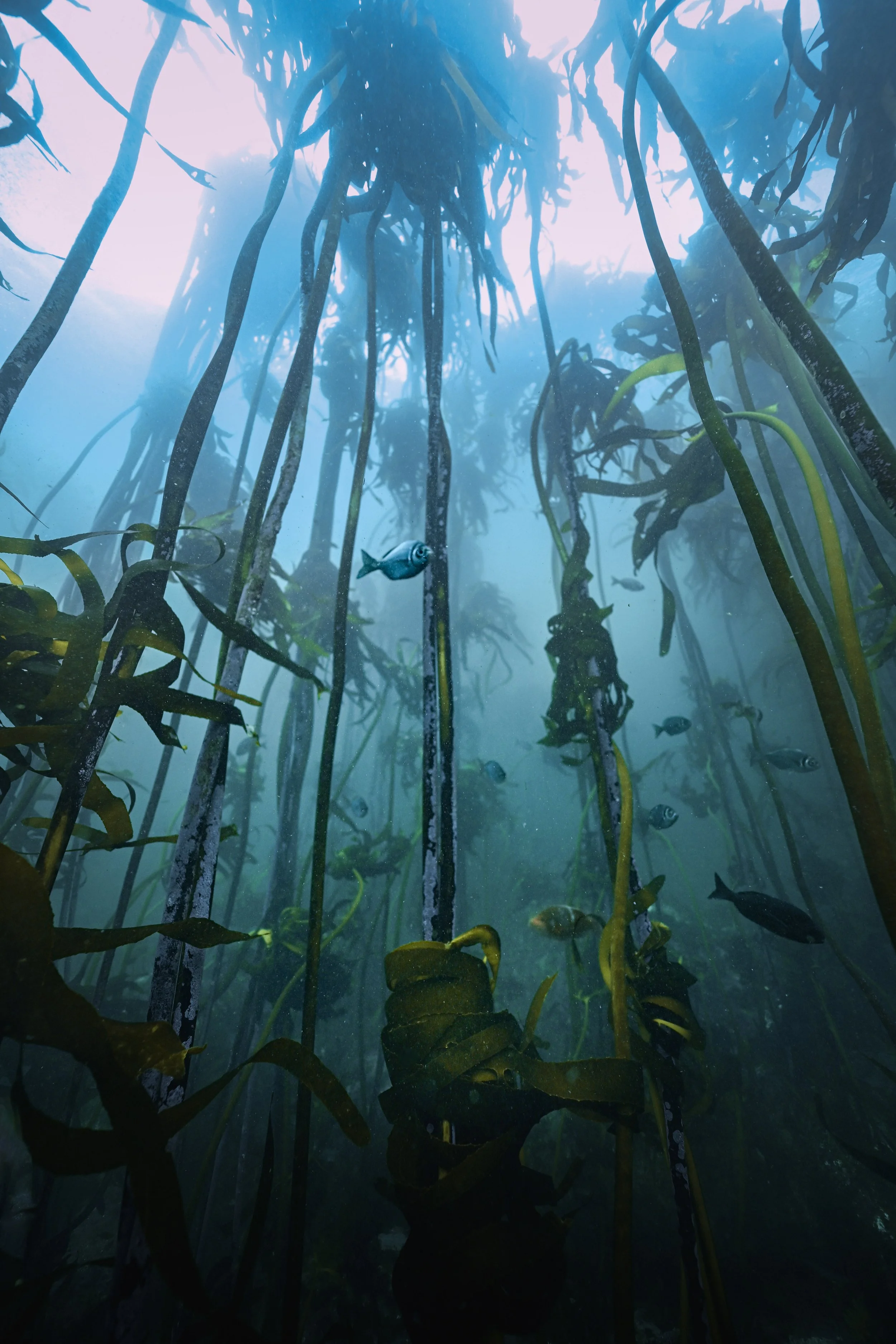
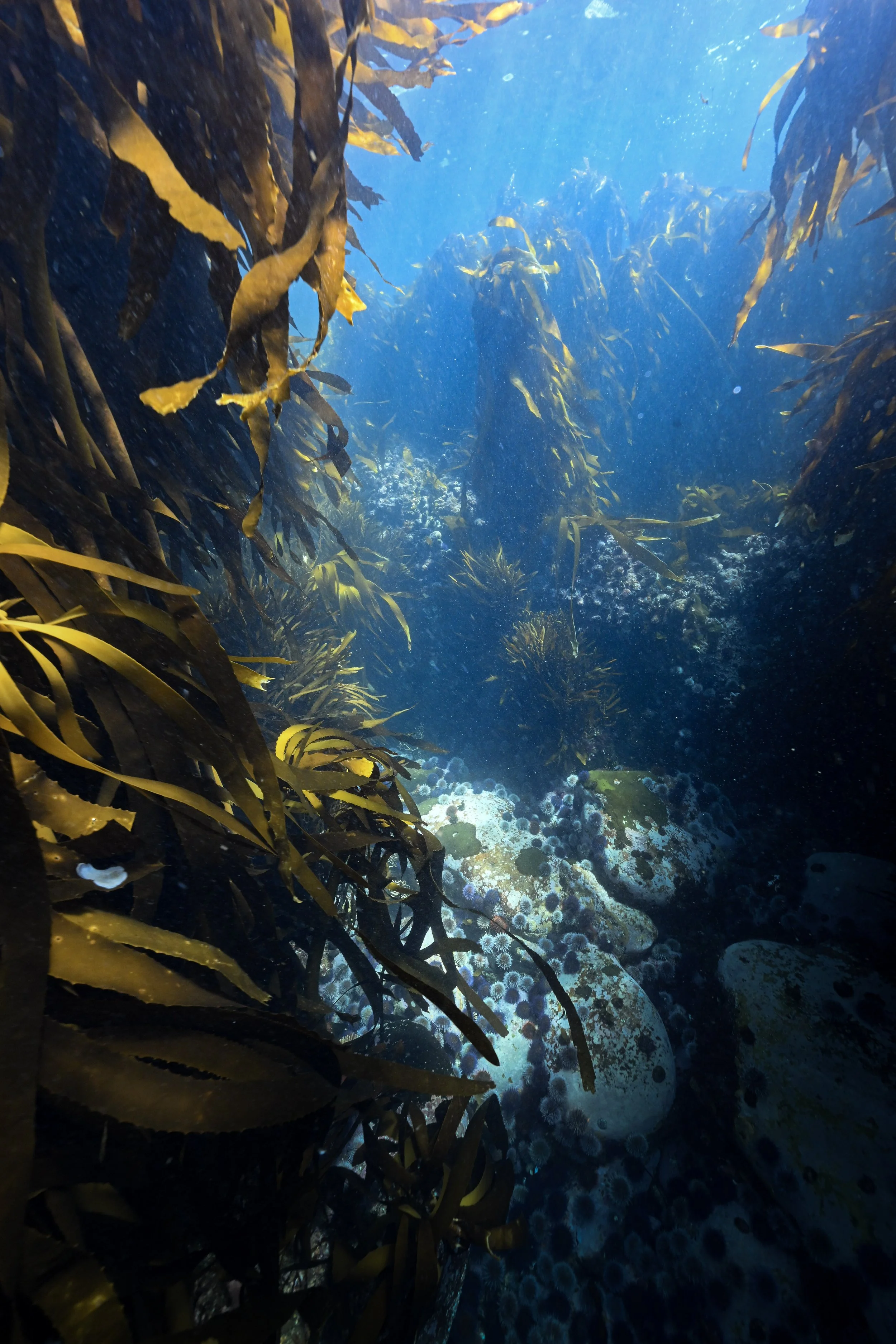
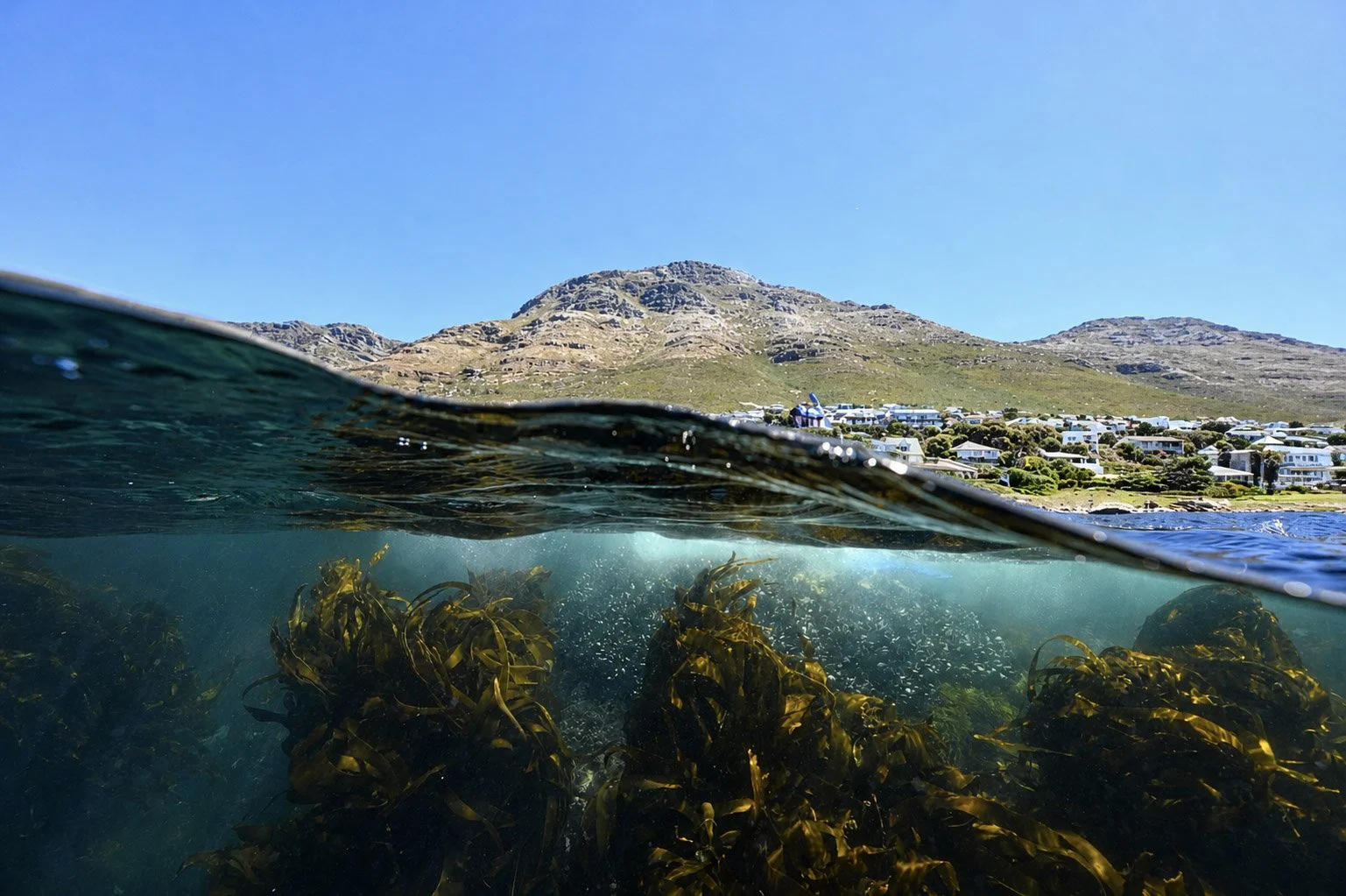
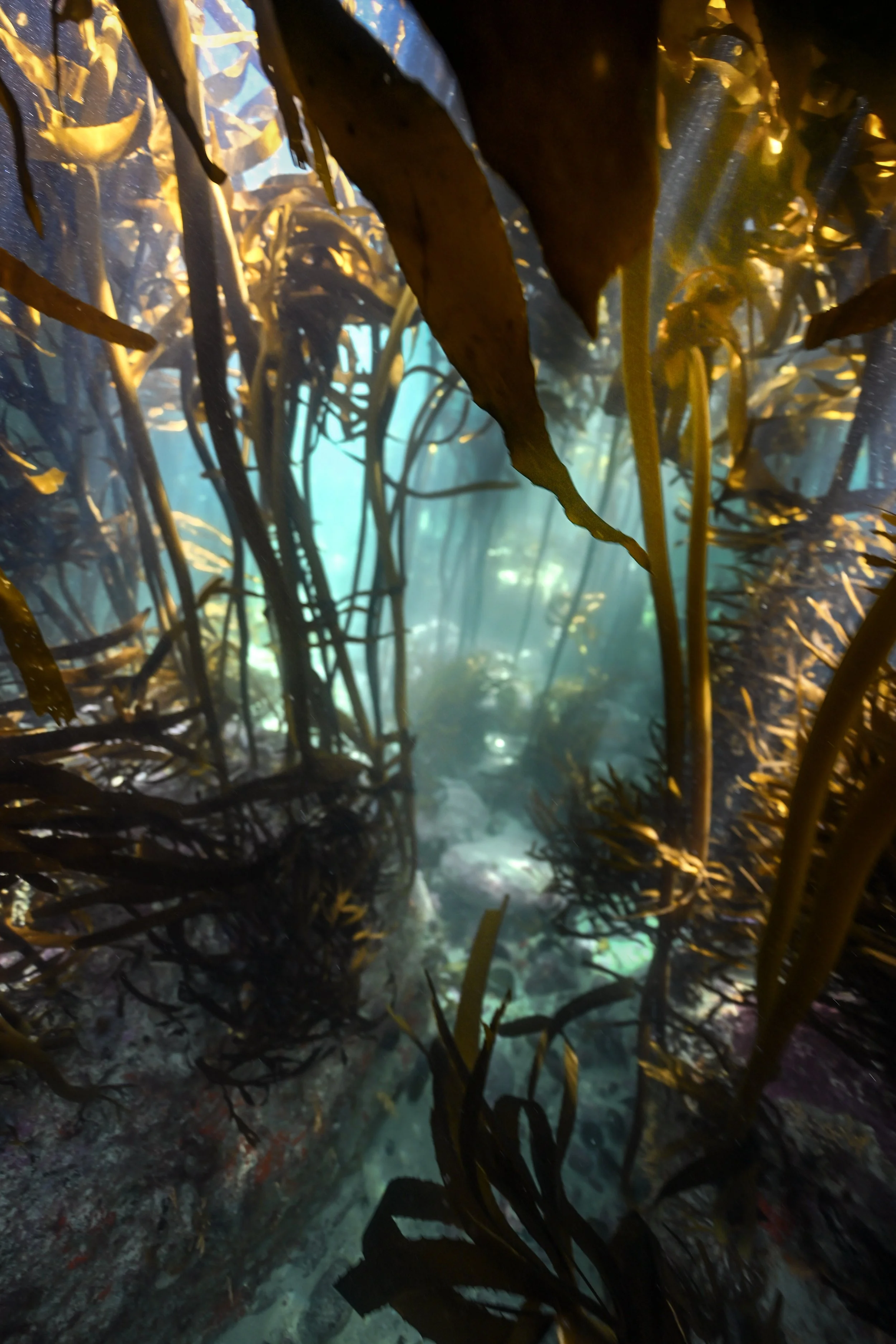
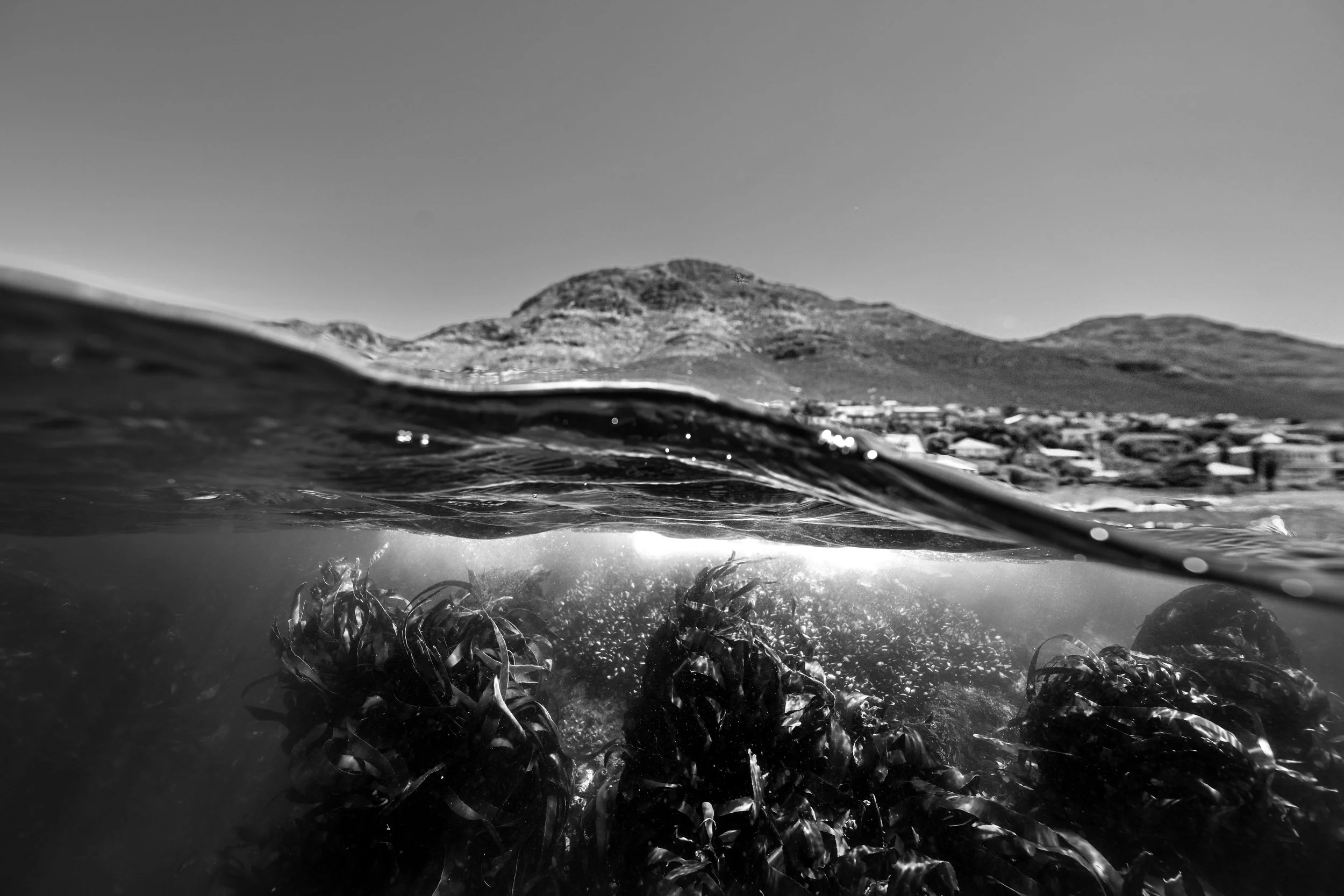
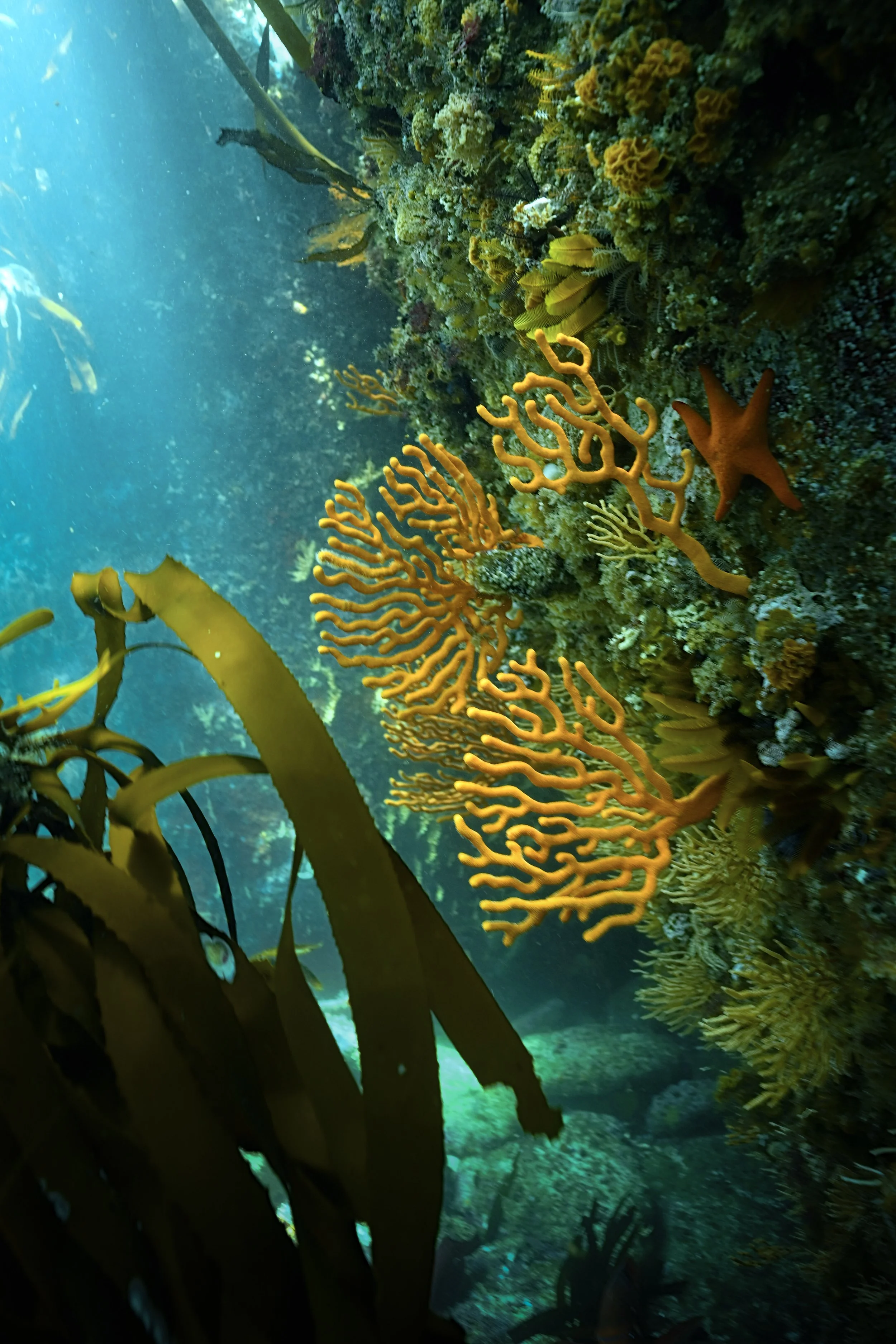
Kelps are large brown algae of the order Laminariales. Southern Africa hosts four species: Ecklonia maxima, Ecklonia radiata, Laminaria pallida and Macrocystis pyrifera. Two of them shape the underwater landscape: E. maxima and L. pallida have by far the highest biomass on inshore rocky reefs and are the only species exploited commercially. On the west coast E. maxima forms a surface canopy in shallow water (shallower than about 5 m), while L. pallida builds an understorey that can extend to 20 m or more.
E. maxima, known as sea bamboo, owes its buoyancy to its structure: a swollen, gas-filled stipe that holds the fronds at the surface in a dense canopy. It is one of the largest kelps, generally not exceeding 10 m in length, with stipes up to 17 m recorded only on rare occasions.
The reason it thrives here is the Benguela upwelling. According to UNESCO's description, south-easterly winds drive coastal upwelling that brings cold, nutrient-rich water from roughly 200–300 m depth to the surface, and the intensity of upwelling depends on wind strength. Along the west coast, from Cape Agulhas to Lüderitz, kelp beds dominate the rocky shore wherever this cold water reaches. A 2007 survey estimated E. maxima biomass at between 3 and 24 kg fresh weight per square metre, and over 593,000 tonnes of surface-reaching kelp beds on the west coast.
Rothman, M.D., Bolton, J.J., Stekoll, M.S. et al. Geographical variation in morphology of the two dominant kelp species, Ecklonia maxima and Laminaria pallida (Phaeophyceae, Laminariales), on the west coast of Southern Africa. J Appl Phycol 29, 2627–2639 (2017)
Anderson, R., Rand, A., Rothman, M., Share, A., & Bolton, J. (2008). Mapping and quantifying the South African kelp resource. African Journal of Marine Science, 29(3), 369–378.
The surface web
What lives between the surface and the rock?
A forest in three levels
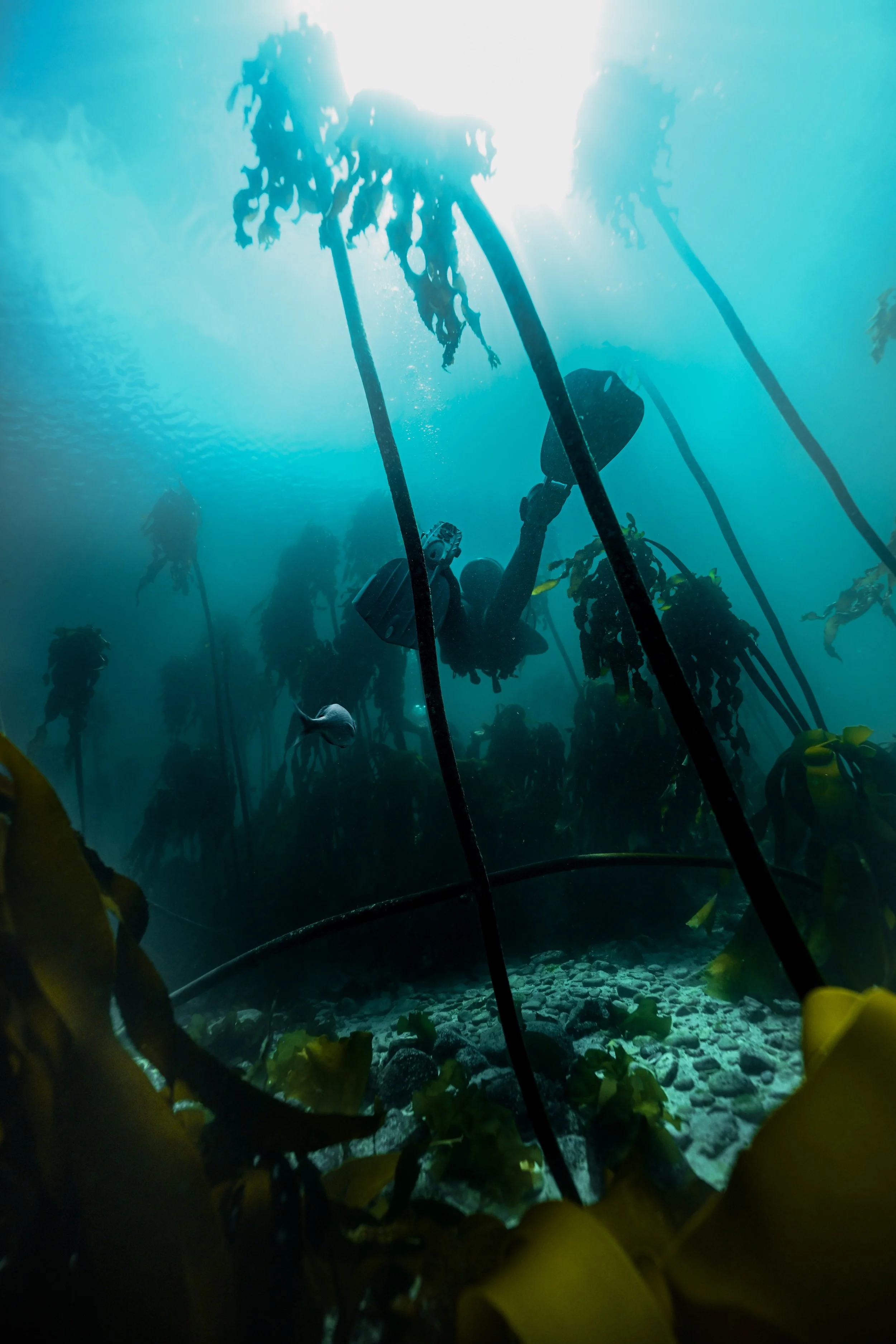
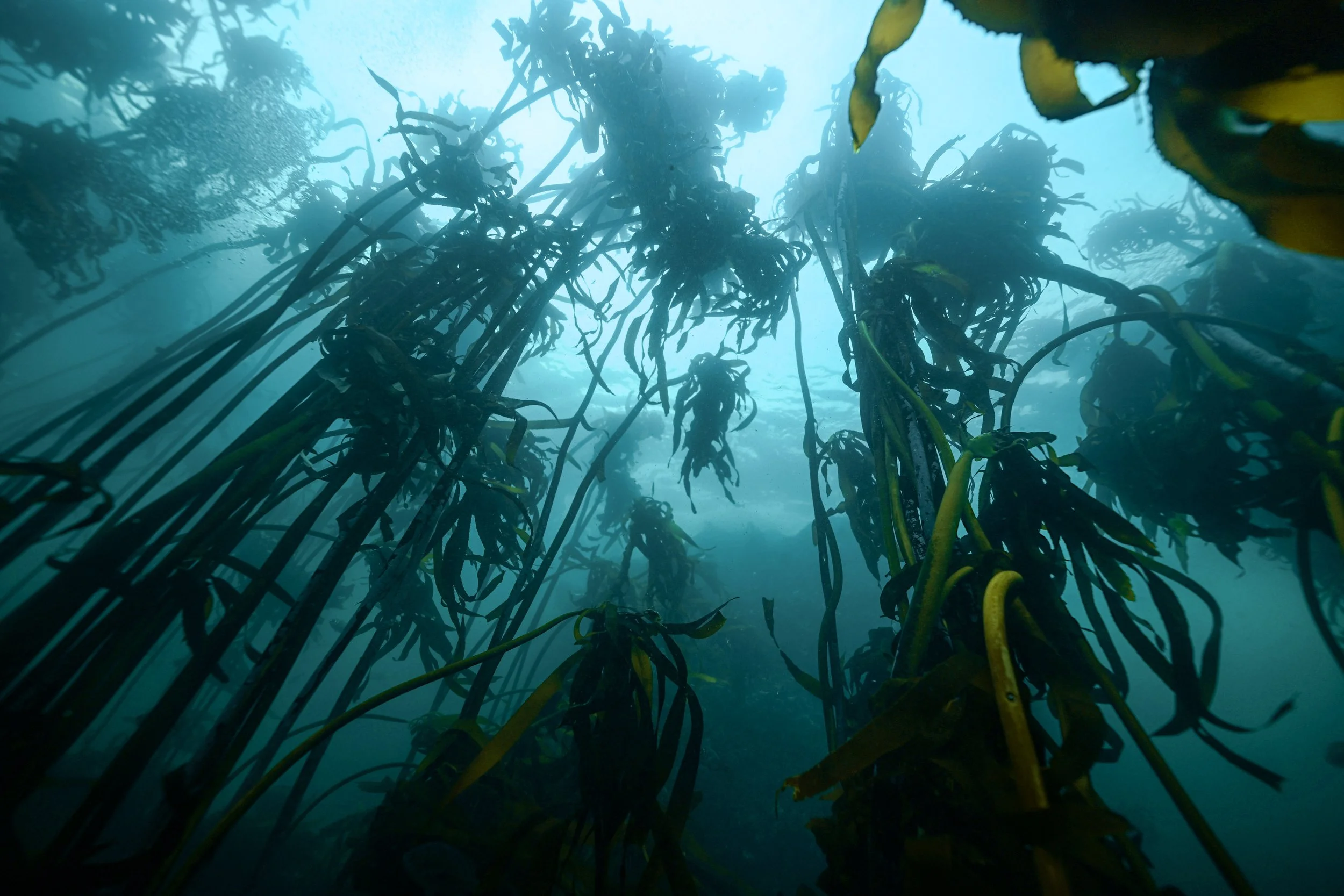
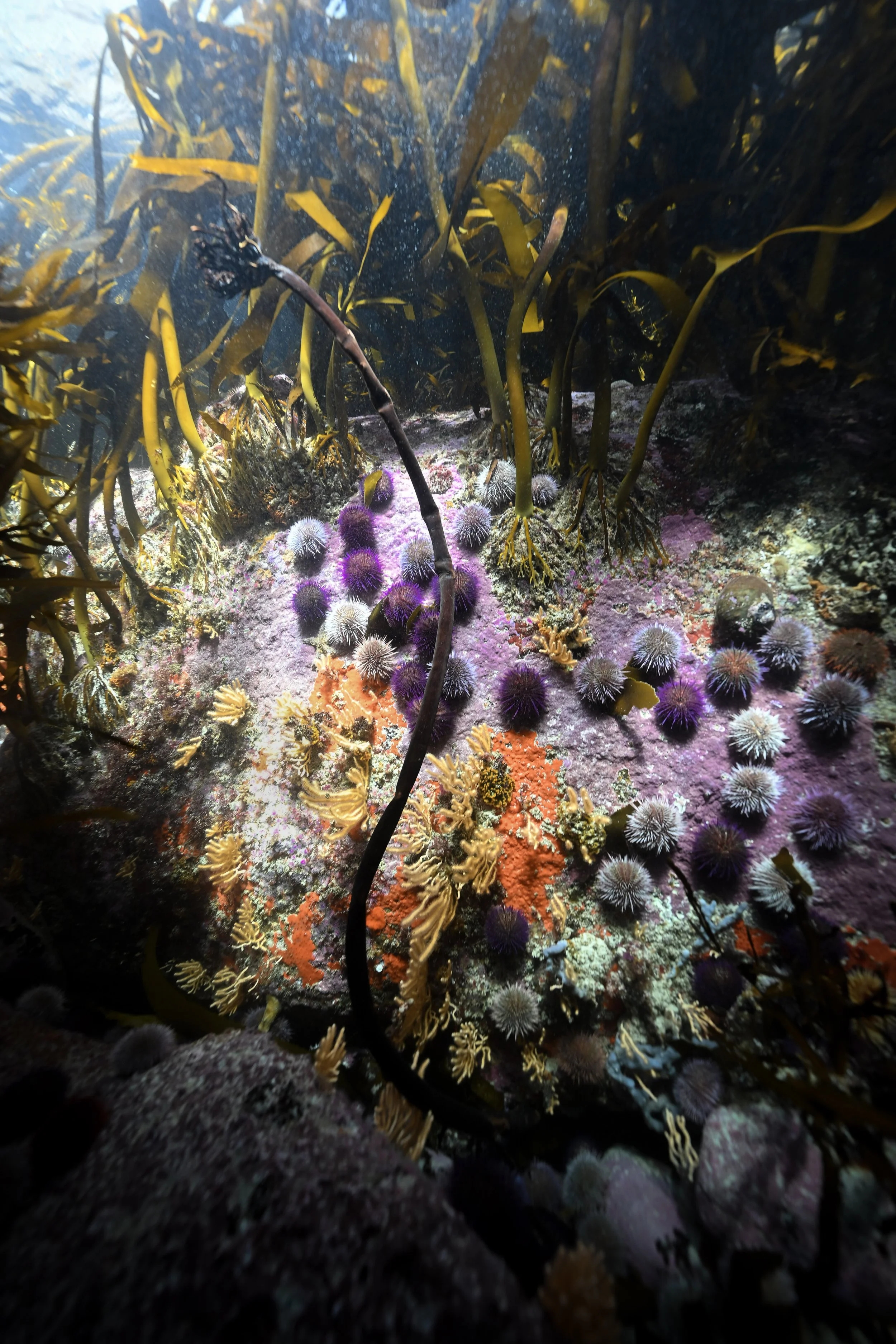
Look up from the seabed in a kelp forest and you'll see it is built like a woodland. At the top, the fronds of E. maximaform a canopy at the surface, in water shallower than about 5 m. Below, L. pallida forms an understorey that can reach 20 m or more. At the bottom, each plant is anchored to the rock by a holdfast, its root-like base. A University of Cape Town study described E. maxima as shade-tolerant and able to regenerate under a closed canopy, and compared the dynamics of kelp beds with those of terrestrial forests.
Small shelters, big roles - The holdfasts do more than hold on. Research shows that the holdfasts of adult E. maxima give young kelps a refuge from grazers. The forest also hosts specialists: according to a South African botanist, the limpet Cymbula compressa lives only on E. maxima.
Shaped by the sea - A kelp forest sits where the ocean is most restless, and the plants show it. A 2020 study on E. maxima and L. pallidacompared temperature and wave exposure and found that wave exposure was the main driver of how the plants adapt their shape. In kelps more generally, exposed sites favour larger holdfasts and thicker stipes and blades.
Does the canopy calm the sea?
It's a natural question when you swim beneath it. A classic study of Benguela kelp beds described a breakwater effect, with the canopy dissipating wave energy. More recent measurements are more cautious: in giant kelp (Macrocystis pyrifera), the forest damped wave energy in a detectable way, but only modestly, and the capacity of different species remains uncertain. The honest answer is that it helps, and how much depends on the kelp and the conditions.
Coppin, Ross, Rautenbach, Christo and Smit, Albertus J.. "Individual-based numerical experiment to describe the distribution of floating kelp within the Southern Benguela Upwelling System" Botanica Marina, vol. 67, no. 5, 2024, pp. 469-486
Elsmore K, Nickols KJ, Miller LP, Ford T, Denny MW, Gaylord B. Wave damping by giant kelp, Macrocystis pyrifera. Ann Bot. 2024 Mar 8;133(1):29-40
A forest that feeds industries
Who is allowed to take from the forest, and how much can it give?
Two ways of taking kelp
Some kelp is simply gathered on the shore: beach-cast kelp has been collected in South Africa since at least 1953. The rest is cut at sea, and only permit holders may do it. The coast between Port Nolloth and Port St Johns is divided into 23 harvesting areas. One reason for the demand is aquaculture: abalone farming has increased the demand for freshly harvested E. maxima. A company based in Simon's Town also makes a plant growth stimulant, Kelpak, from E. maxima.
Levitt, G., Anderson, R., Boothroyd, C., & Kemp, F. (2006). The effects of kelp harvesting on its regrowth and the understorey benthic community at Danger Point, South Africa, and a new method of harvesting kelp fronds. African Journal of Marine Science, 24, 71–85
Are the plants uprooted? Does it grow back?
Not in the traditional method. Divers cut each plant just above the holdfast, so the base stays on the rock. Cutting is not harmless: cutting the whole head from a boat or by divers removes the whole plant, and cutting very close to the base (2 cm) produced little regrowth. A newer method cuts only the fronds, so the plants stay alive and give a higher yield, and the national authority now prescribes frond-only cutting to reduce ecological damage.
Locally, it grows back. At Danger Point, two years after whole plants were harvested in test lanes, kelp biomass and density had recovered and no differences were found in the animals and algae living beneath. But the same study found that the 22,973 tonnes of kelp in 336 hectares would not meet projected abalone feed needs if harvested the traditional way. Frond cutting has its own caution: it can leave the kelp head floating higher and more exposed to drying, so researchers advise care in setting harvest limits.
What a chemist sees
Can a seaweed replace plastic? The honest answer is: partly, and it is complicated.
Not a forest of fibres - When we think of renewable materials for packaging, we usually think of wood: cellulose fibres, held together and reinforced by lignin. Kelp is a different kind of biomass. Lignin, a major component of wood, is absent in seaweed, and cellulose is typically present in much smaller amounts. That is why kelp is not a source of fibres in the way a forest is.
What it is made of instead - The structure of brown algae relies on other molecules. Alginate and cellulose are the main structural polysaccharides in their cell walls, and alginate content ranges from 17 to 45% in the species studied, with fucoidan at 3 to 10%. For energy storage, the algae use laminarin and mannitol. Composition also changes: it varies substantially with species and season. One of the sugars in alginate, uronic acid, is much more common in seaweed than in most terrestrial biomass.
The promise of alginate - This difference is also an opportunity. Alginate is a natural polymer, and reviews describe it as a promising material for plastic-free food packaging films. The chemistry of seaweed also offers high-value chemicals that cannot be obtained from lignocellulosic biomass. For example, in one study hydrogenating alginate gave about 49% sugar alcohols, against 10% for the whole seaweed.
The catch - A promising molecule is not yet a packaging material. The reviews list water vapour permeability, mechanical stability and processing limits as the main challenges, and note that pure alginate films are rigid and brittle. Scientists work around this with plasticisers and ionic crosslinking, or by combining alginate with other materials. And any new film has to perform on existing industrial forming and filling lines.
What a chemist sees - A chemist sees a biorefinery rather than a pulp mill: first extract the high-value molecules, then make use of what remains. Kelp is better seen as a source of functional polymers, such as binders, coatings and films, than as a source of fibres. It can complement wood-based materials, not replace them. And a renewable origin is only the starting point: performance, processing and end of life decide whether a material can truly take the place of plastic.
Grazers, lobsters and a regime shift
In one corner of the Cape, a predator rewired an entire reef
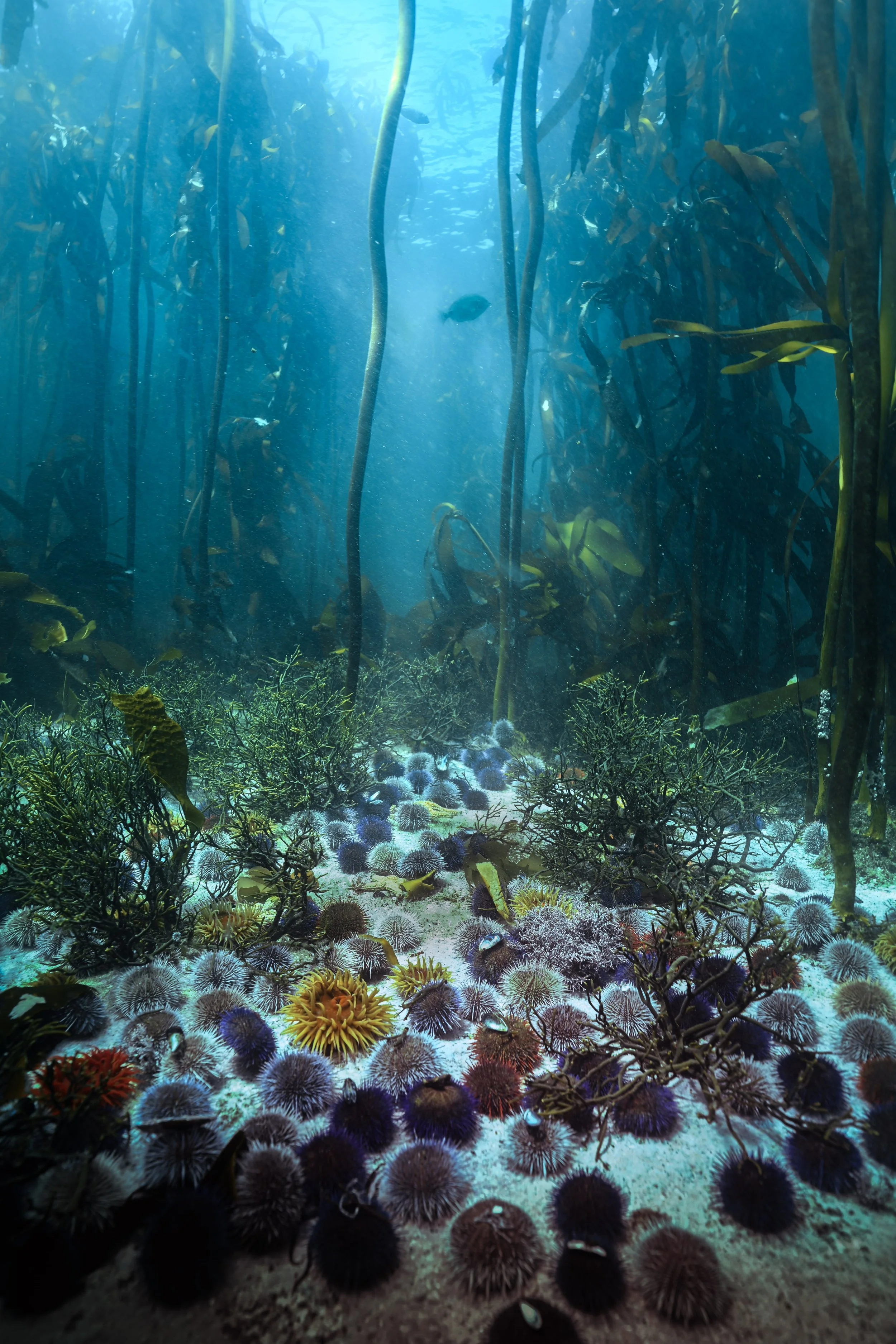
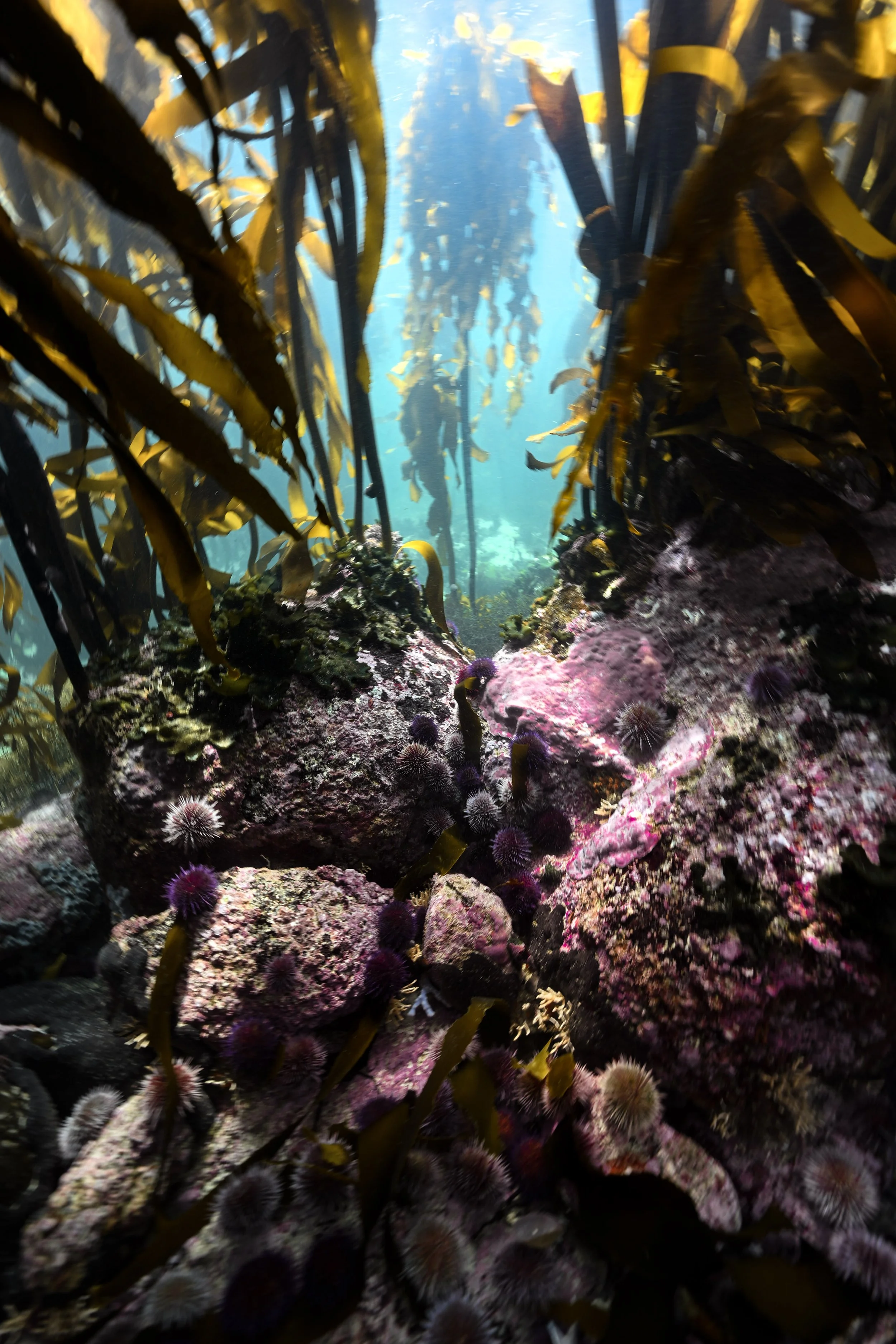
Between Cape Point and Cape Agulhas, kelp forests grow where two biogeographic worlds overlap, and their balance is delicate. A study of six forests along the western shore of False Bay found that kelp increased from north to south while urchins declined. It also revealed a tipping point: above about 50 urchins per square metre, kelp stayed below 10 plants per square metre and understorey algae usually covered less than 20% of the reef.
Further east, the change was far more dramatic. In the early 1990s, the West Coast rock lobster (Jasus lalandii) expanded south-eastwards into the area east of Cape Hangklip. Herbivores fell by 99.3%, macroalgae rose by 453% and sessile invertebrates by 2,600%. The urchin Parechinus angulosus was virtually wiped out, and because juvenile abalone live closely associated with it, the abalone fishery felt the impact too. A modelling study argued that the lobsters pushed the reef into an alternative stable state, one it is unlikely to leave.
There is a twist: in feeding experiments, lobsters strongly preferred juvenile abalone over urchins, and urchins gave young abalone only limited protection. Whatever the full explanation, the lesson holds: a kelp forest is not a fixed landscape. Predators, grazers and shifting ranges can tip it from one state to another.
Morriss, K; Blamey, LK; Kelp forests in False Bay: urchins vs macroalgae in South Africa's southwest coast biogeographical transition zone, African Journal of Marine Science, 40 (4), 395-406
Van Zyl, R. F., Mayfield, S., & Branch, G. M. (2005). aquarium experiments comparing the feeding behaviour of rock lobster on abalone and sea urchins at two sites on the west coast of south africa. African Journal of Marine Science, 25, 377–382
Reef Gardens: two oceans, two reefs
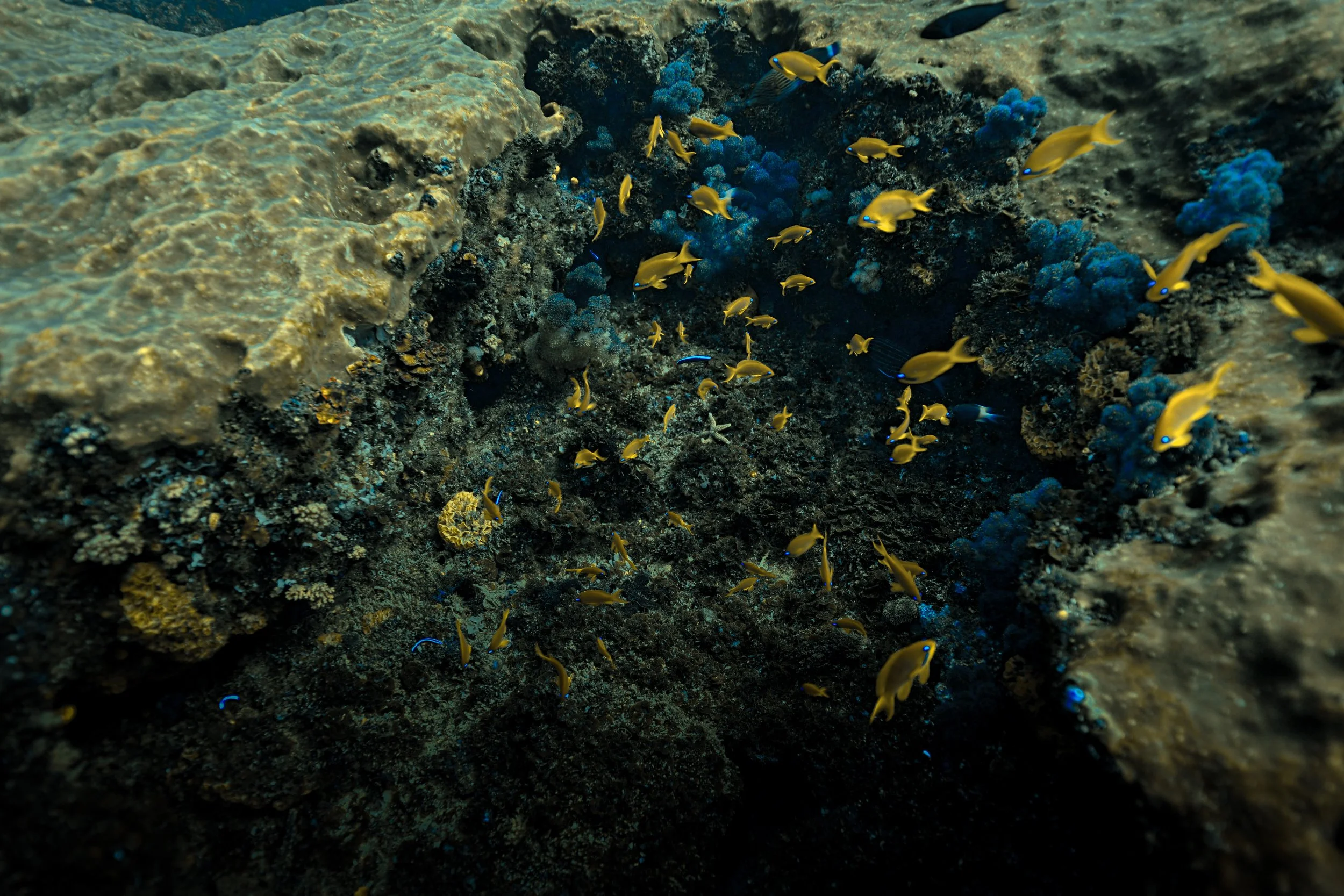
South Africa is framed by two currents. On the west, the cold Benguela Current flows north; on the east, the warm Agulhas Current flows south-west. My photographs come from both sides: Simon's Town, in False Bay, and Aliwal Shoal, in KwaZulu-Natal. Same country, similar colours, different physics.
On the Cape side, cool, nutrient-rich water rises along the Atlantic coast, and the waters are described as holding fewer species in greater profusion. On the east coast, waters dominated by the Agulhas Current are characterised by great biotic diversity, but they are poorer in nitrates, phosphates and plankton than the west. Aliwal itself is a subtropical, algal-dominated reef, not one built by corals.
Cold reefs
The Atlantic garden
A garden with no reef-building corals.
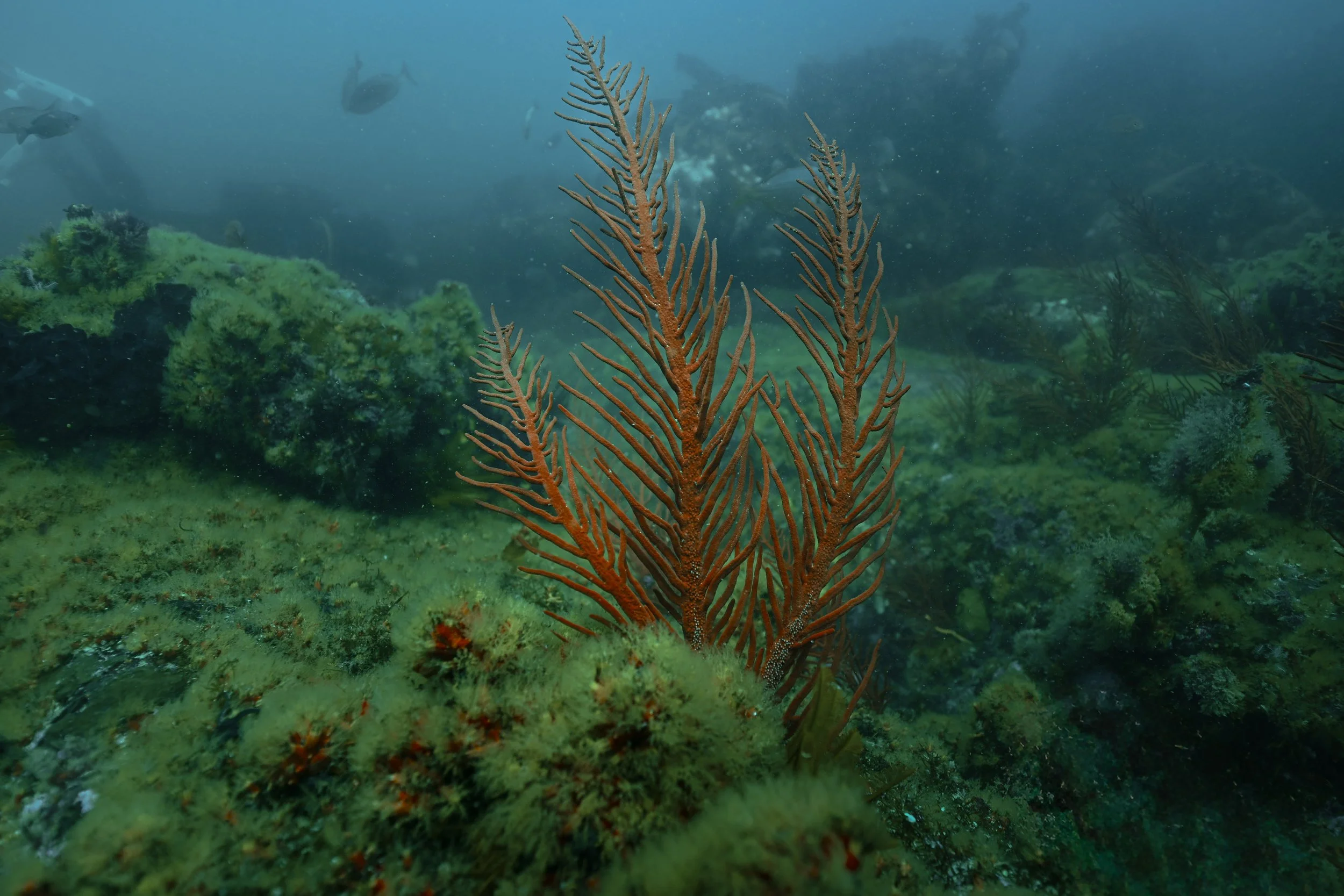
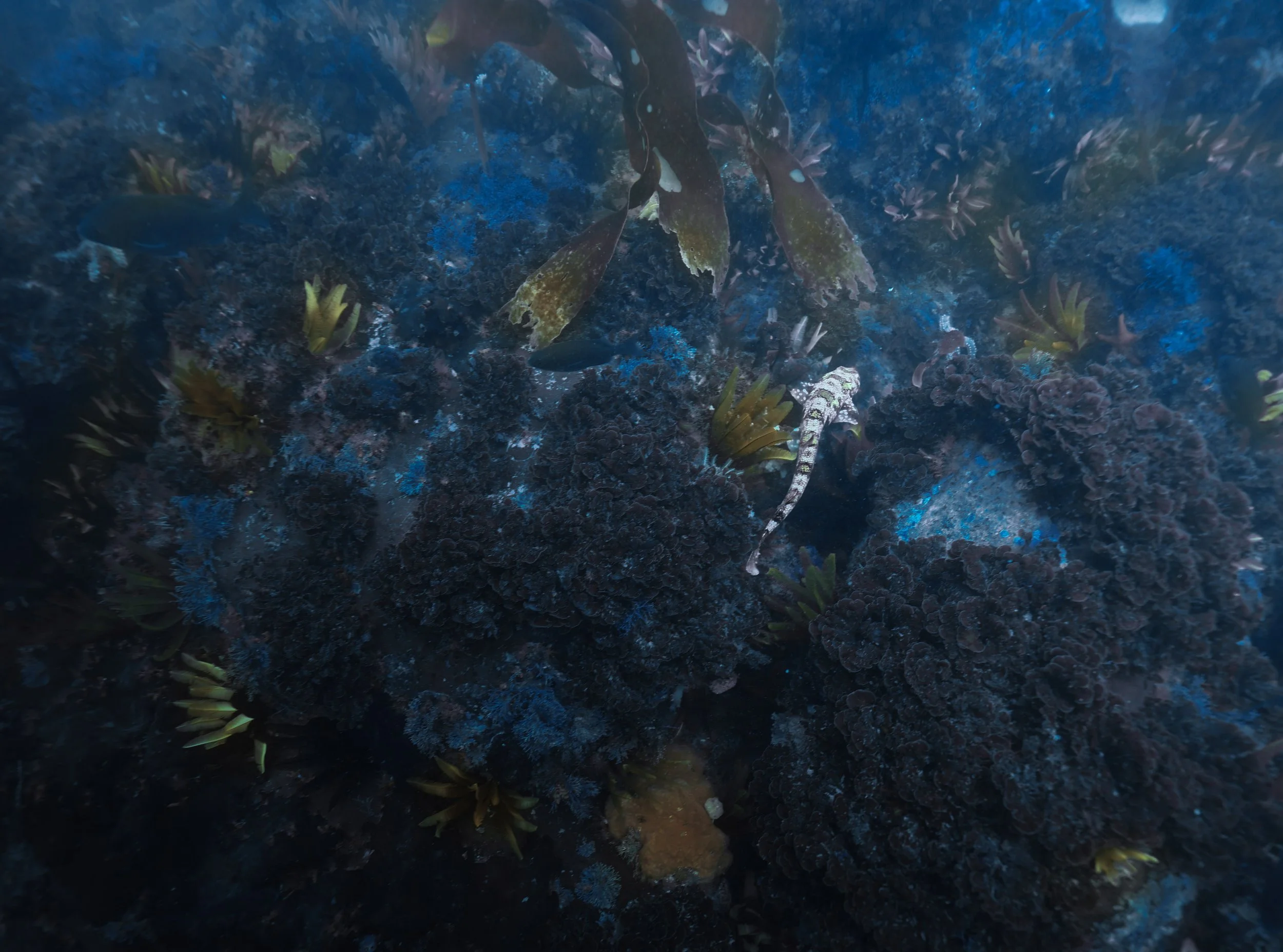
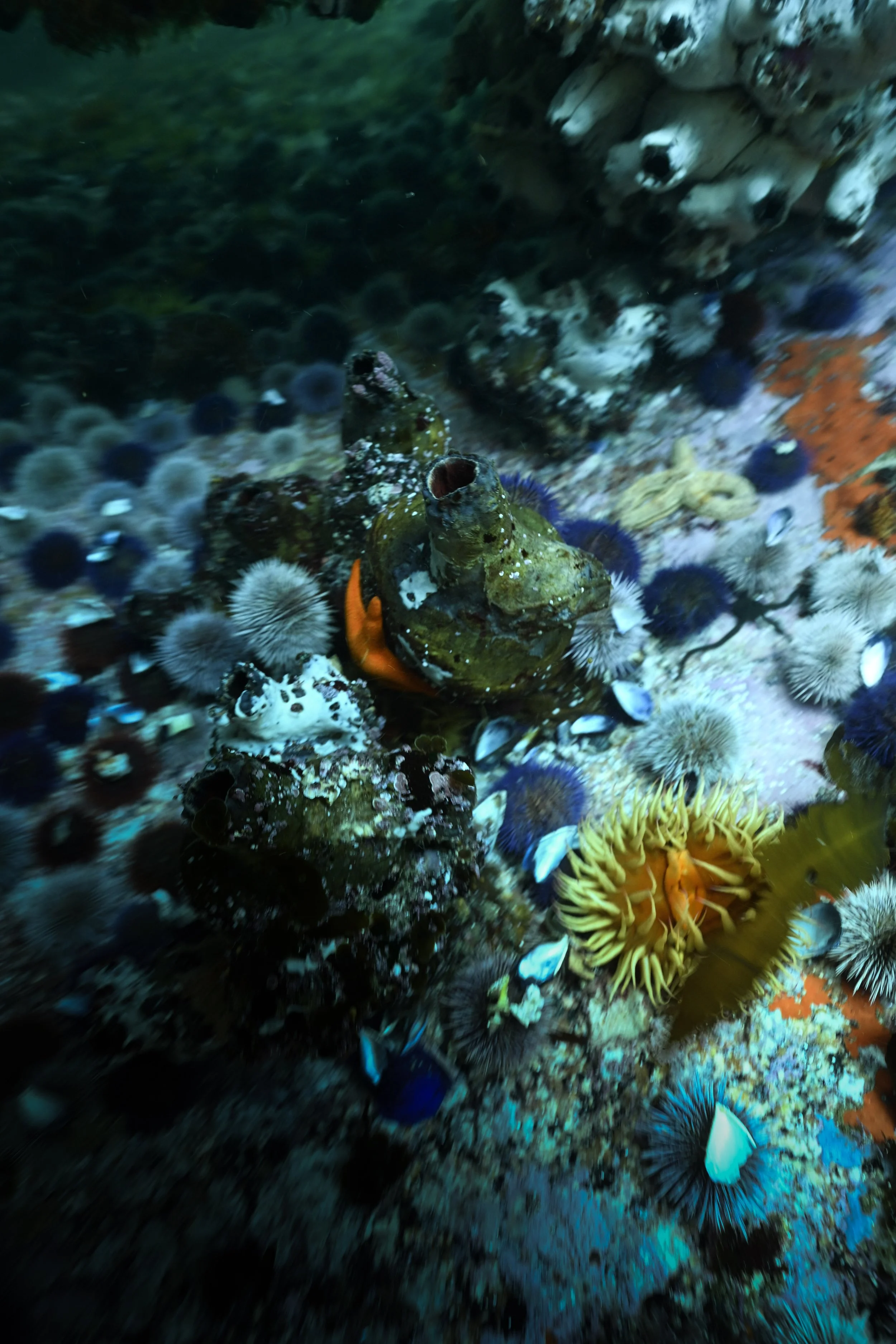
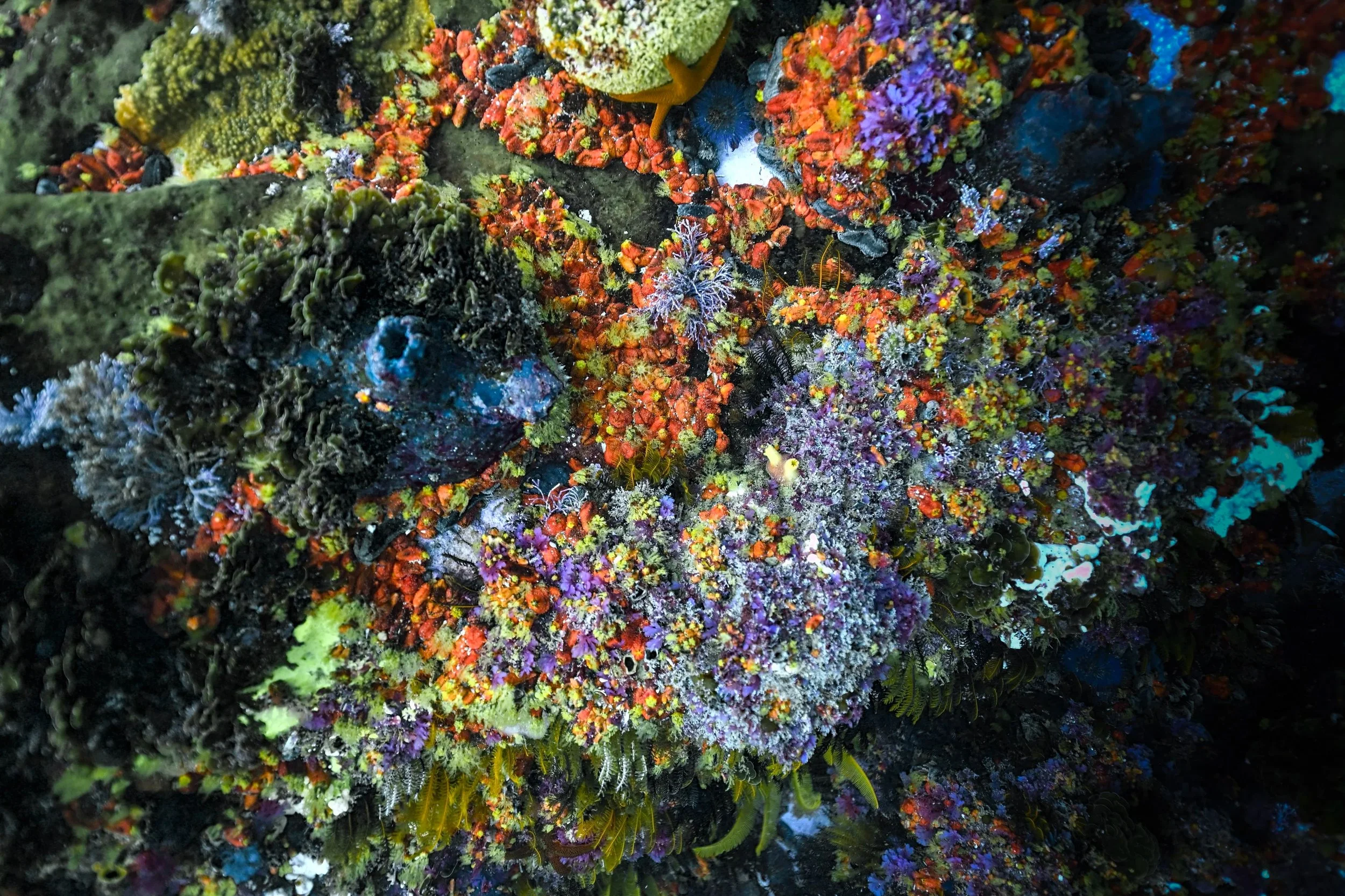
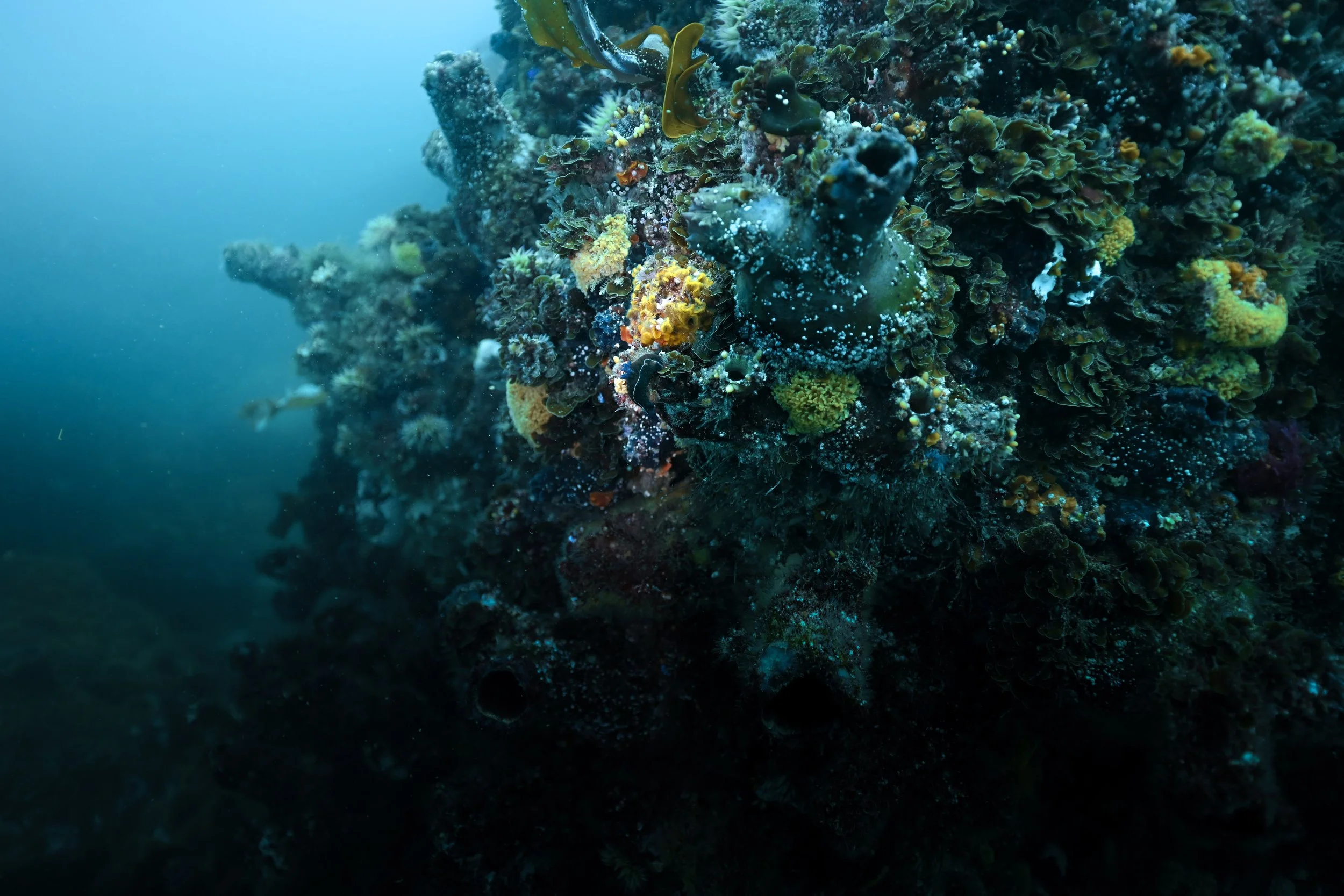
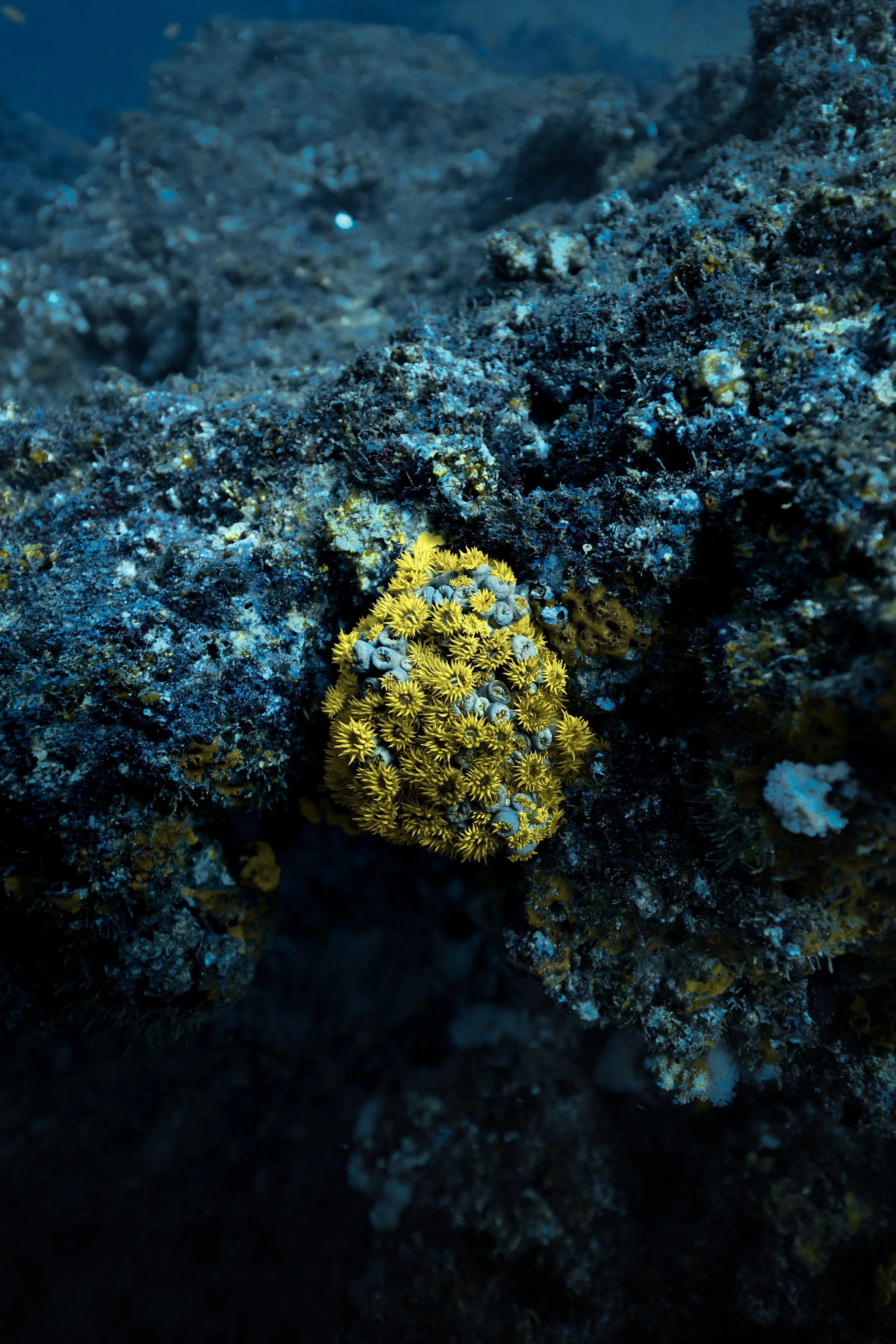
On the Cape side, the colour comes from other animals. One False Bay dive site is known for gorgonian sea fans, sunburst soft corals, striped and strawberry anemones, basket stars, feather stars and sponges on granite outcrops.
Soft corals work differently from the stony corals of tropical reefs. They lack the massive calcium carbonate skeleton, and contain minute spiny elements called sclerites. Most of them thrive in nutrient-rich waters with less intense light, which suits the cool, nutrient-rich Cape.
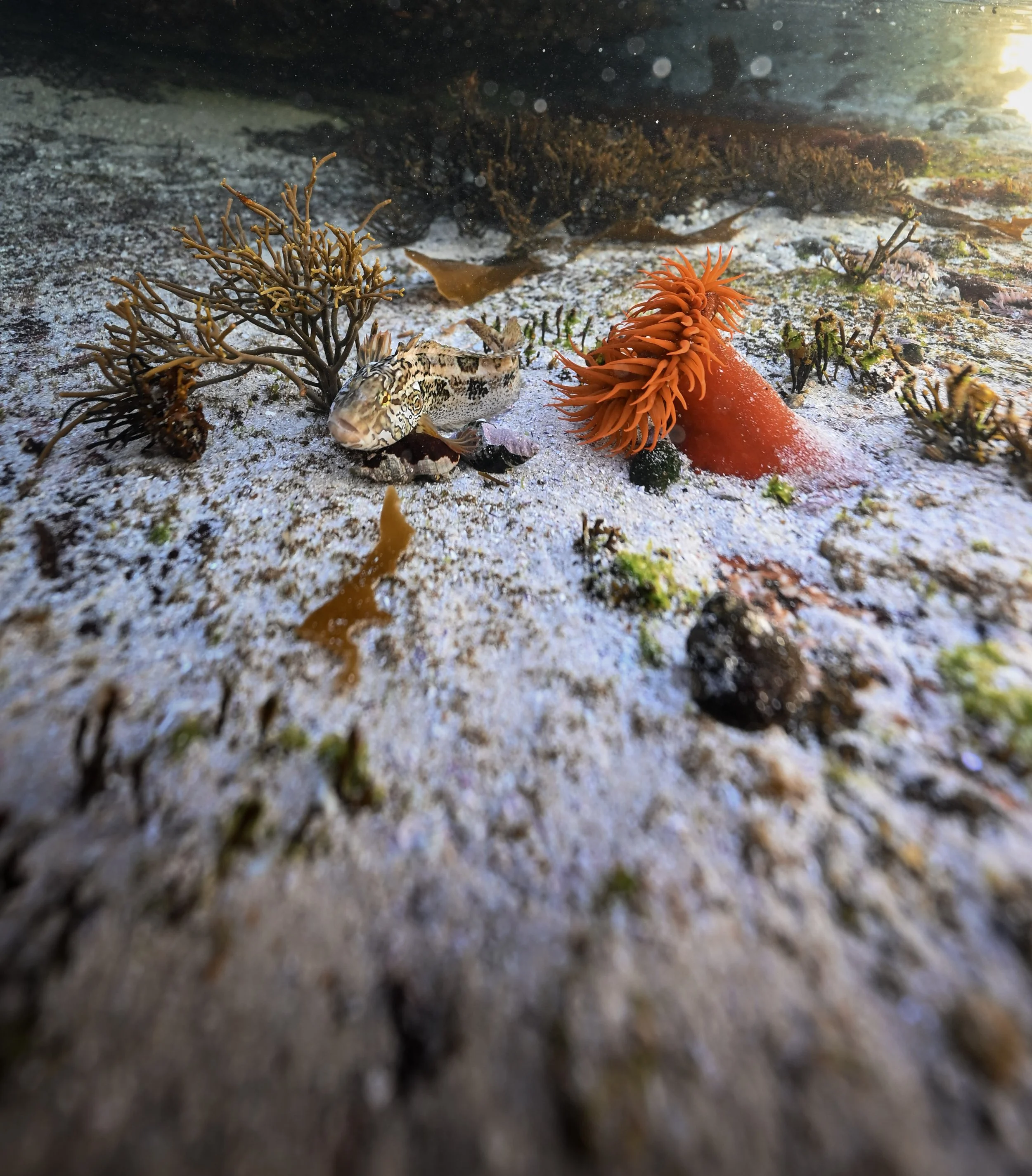
Anemones live in layers. At Wooley's Pool in False Bay, a study found seven intertidal species with clear vertical zonation, with Pseudactinia flagellifera confined to the subtidal zone and the largest of them.
Urchins, small grazers with big consequences
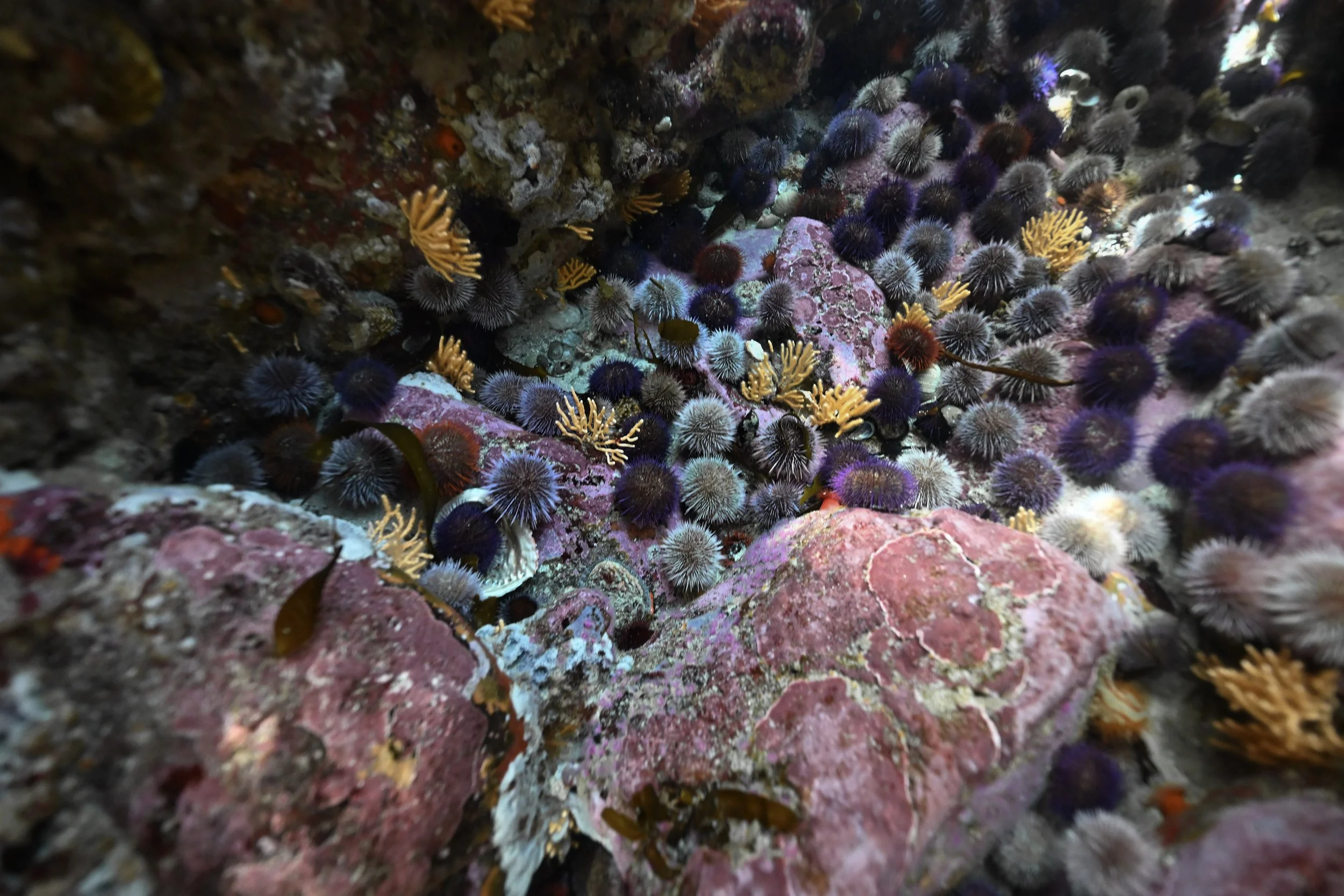
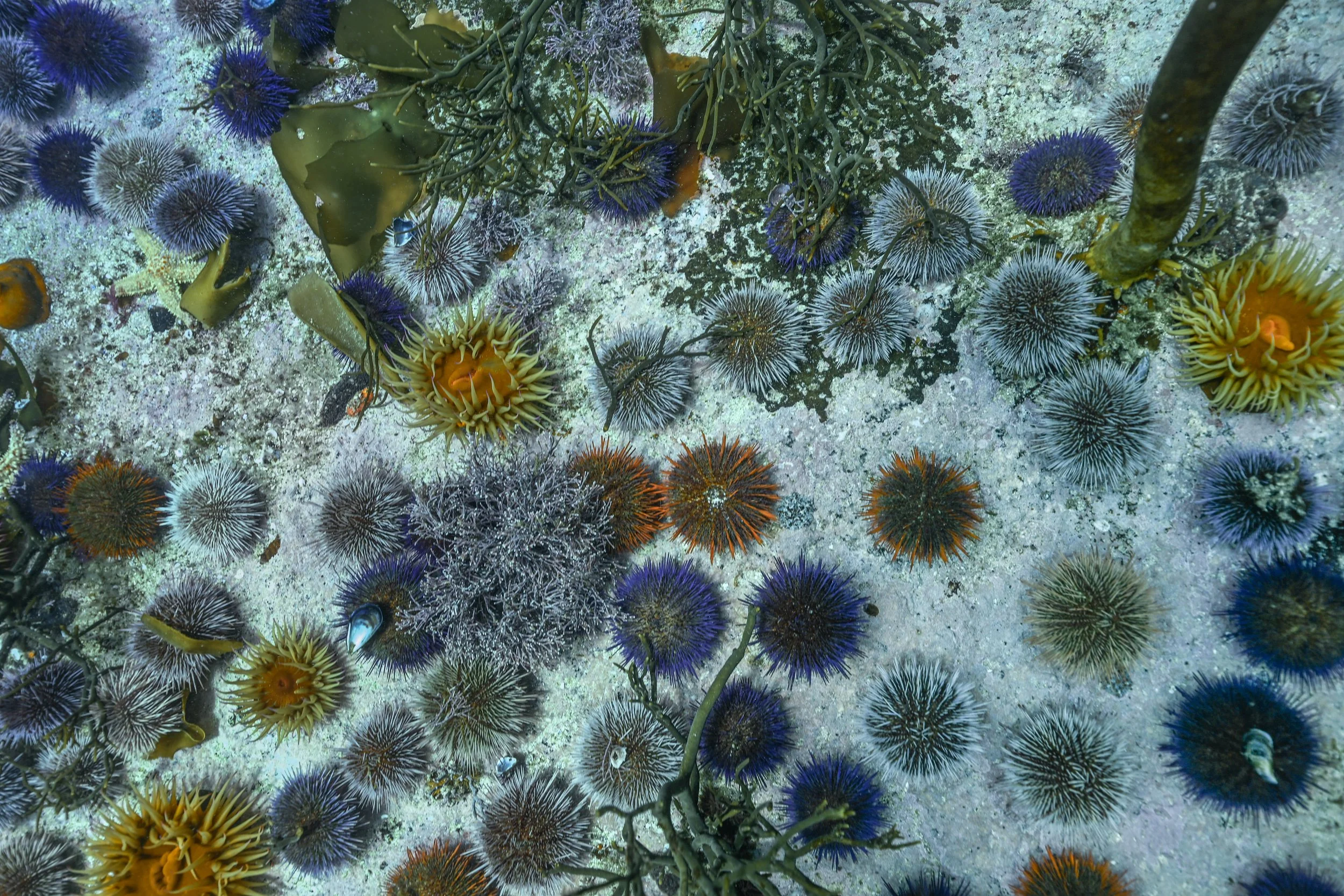
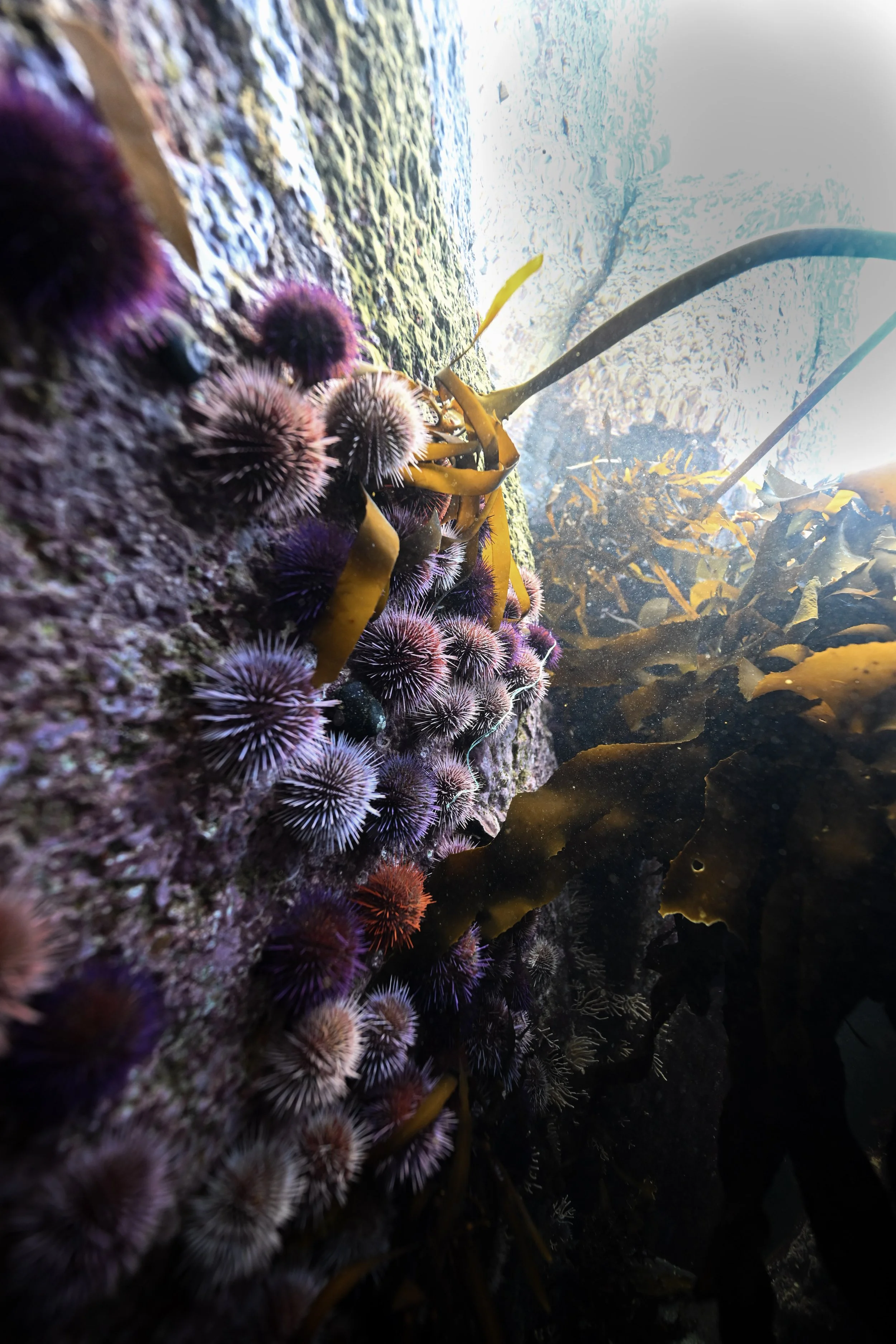
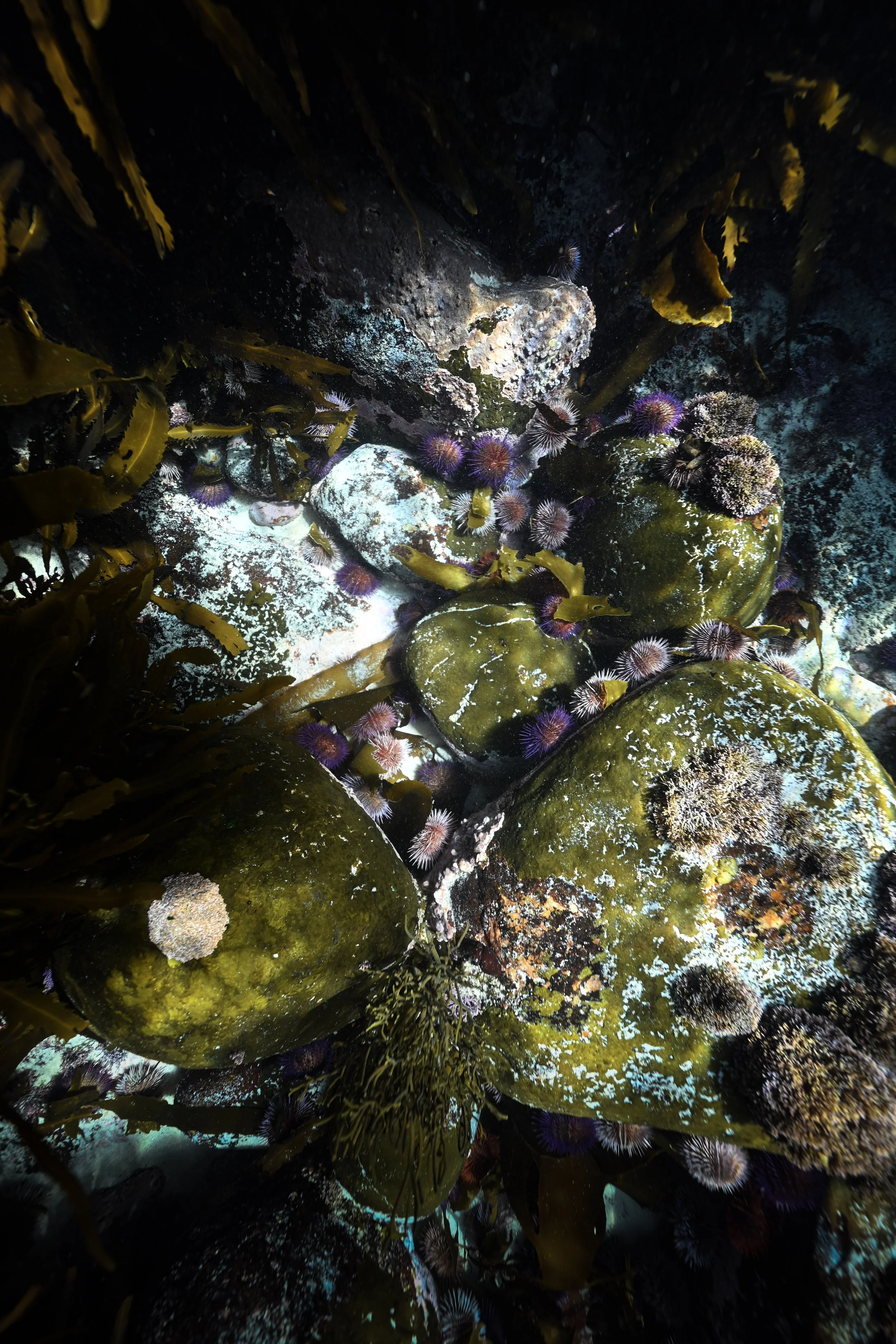
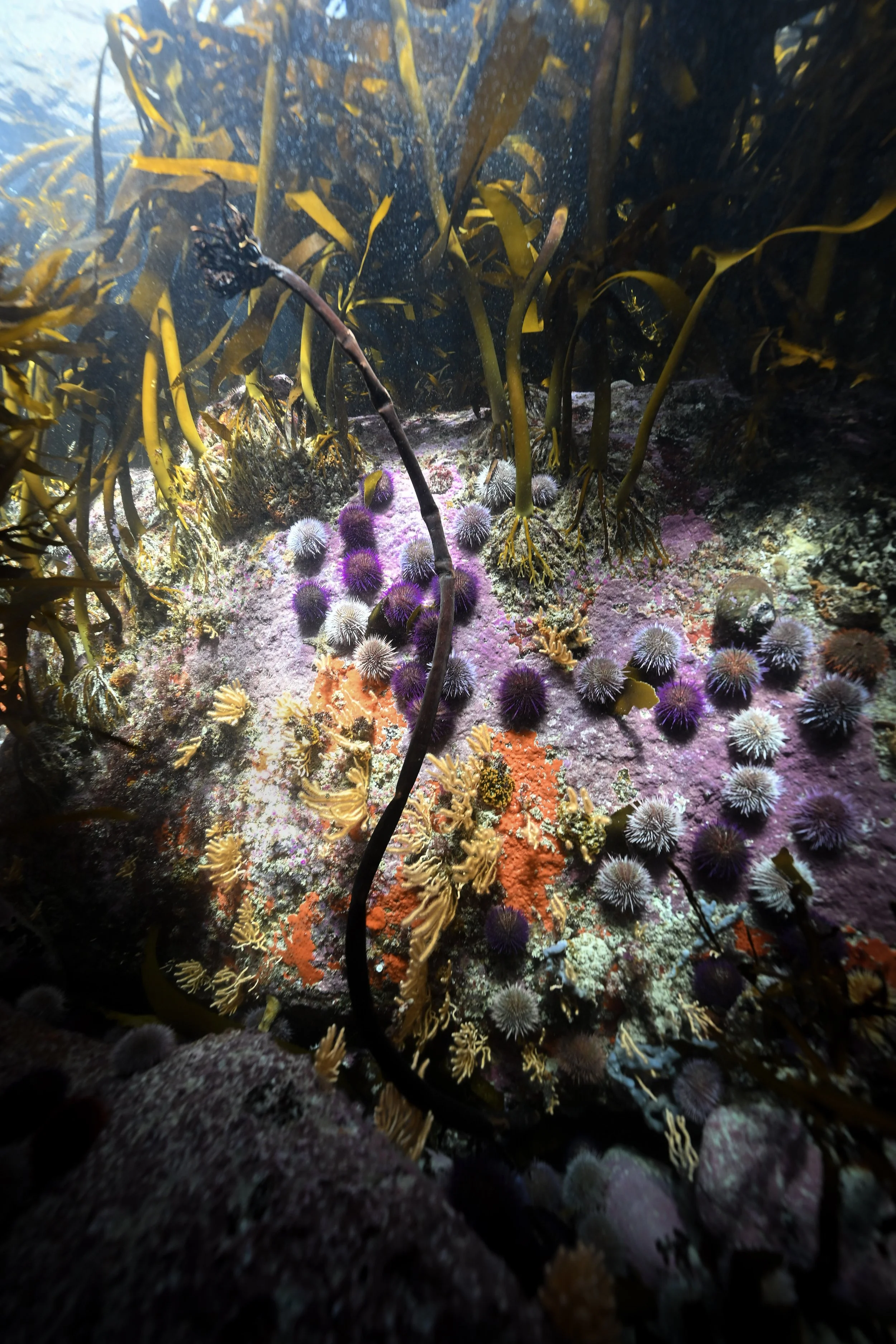
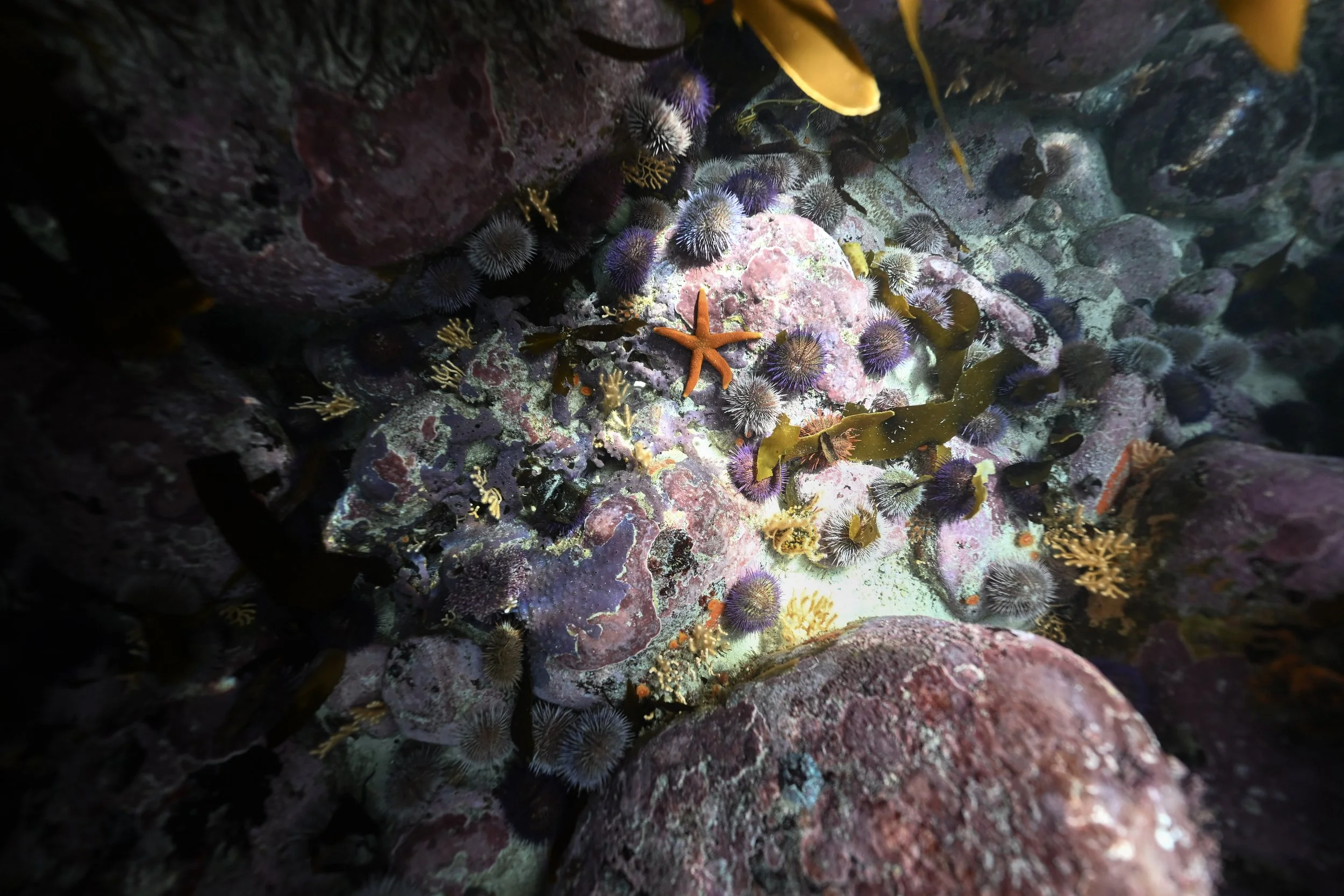
On Cape reefs, a purple carpet of spines is usually the angulate urchin, Parechinus angulosus. It is endemic to South Africa, comes in white, red and purple spine colours, lives from the shallows down to about 70 m, and can form large aggregations.
Urchins matter because they graze. In the kelp forests of False Bay, kelp tends to increase from north to south while urchins decrease, and above about 50 urchins per square metre kelp density stays low. A reef can therefore look very different depending on who eats whom. East of Cape Hangklip, after the rock lobster moved in, herbivores declined by 99.3% and the reef changed with them.
Blamey, L., Branch, G., & Reaugh-Flower, K. (2010). Temporal changes in kelp forest benthic communities following an invasion by the rock lobster
Nudibranchs, jewels of the garden
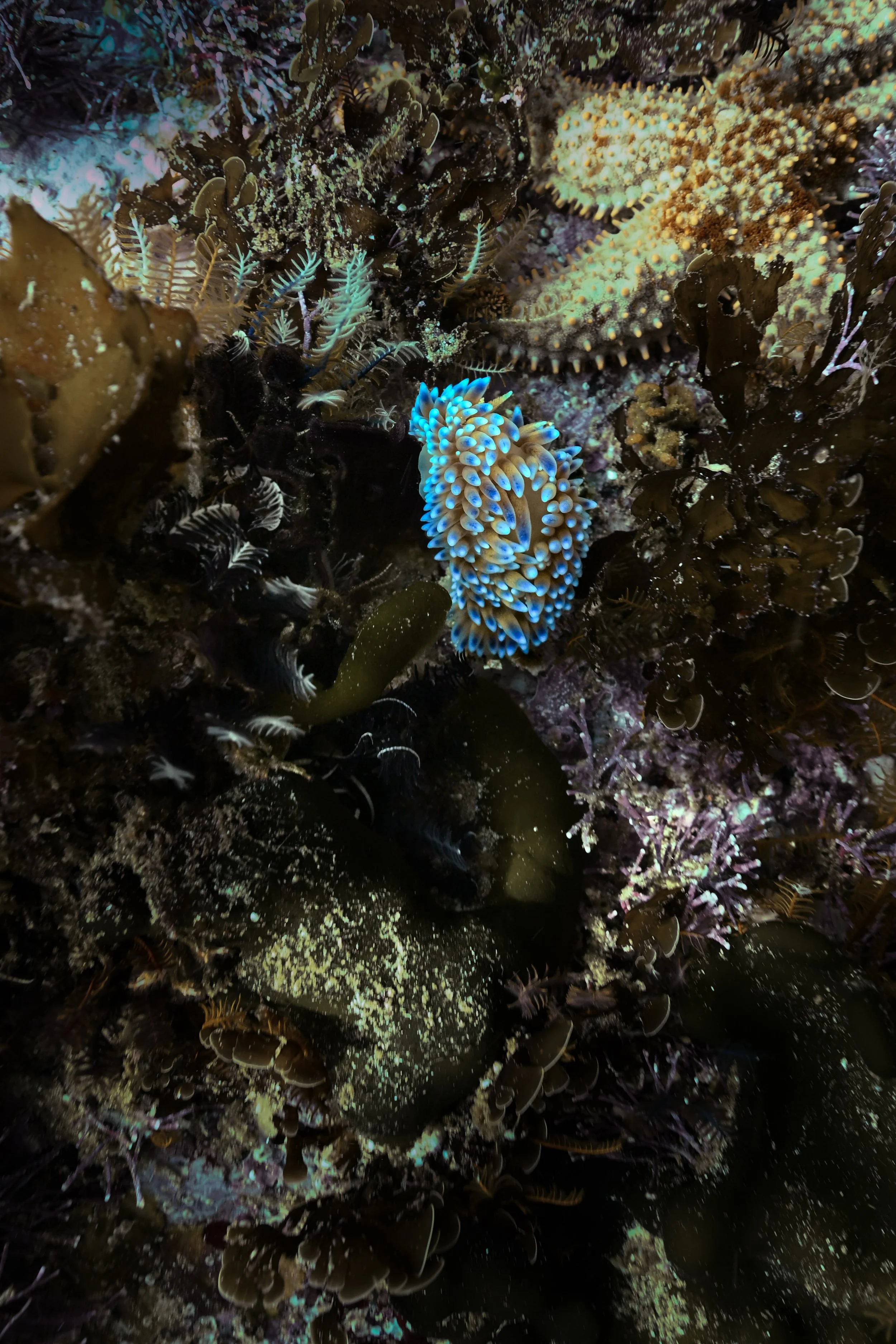
Nudibranchs are sea slugs, shell-less molluscs, and southern Africa is a rich place to find them. A classic field guide documented 268 species of opisthobranch molluscs in the region. The area sits at the convergence of the warm Agulhas and cold Benguela currents, with a high number of endemic species.
Many of their colours are not random. The red sponge nudibranch, Rostanga elandsia, feeds on red and yellow-orange sponges, which determine its colour, and is so well camouflaged on its prey that it is hard to see. It is found only in South Africa, from the Atlantic side of the Cape Peninsula to eastern False Bay. On the other coast, Hypselodoris carnea is frequently reported along the KwaZulu-Natal coast and feeds on sponges, but local animals differ so much from the original description that they may form a species complex.
Two South African endemics, the gasflame nudibranch (Bonisa nakaza) and the black nudibranch (Tambja capensis), both feed on bryozoans, tiny colonial animals that grow on the reef.
The Indian Ocean garden
Warm water, a different kind of reef.
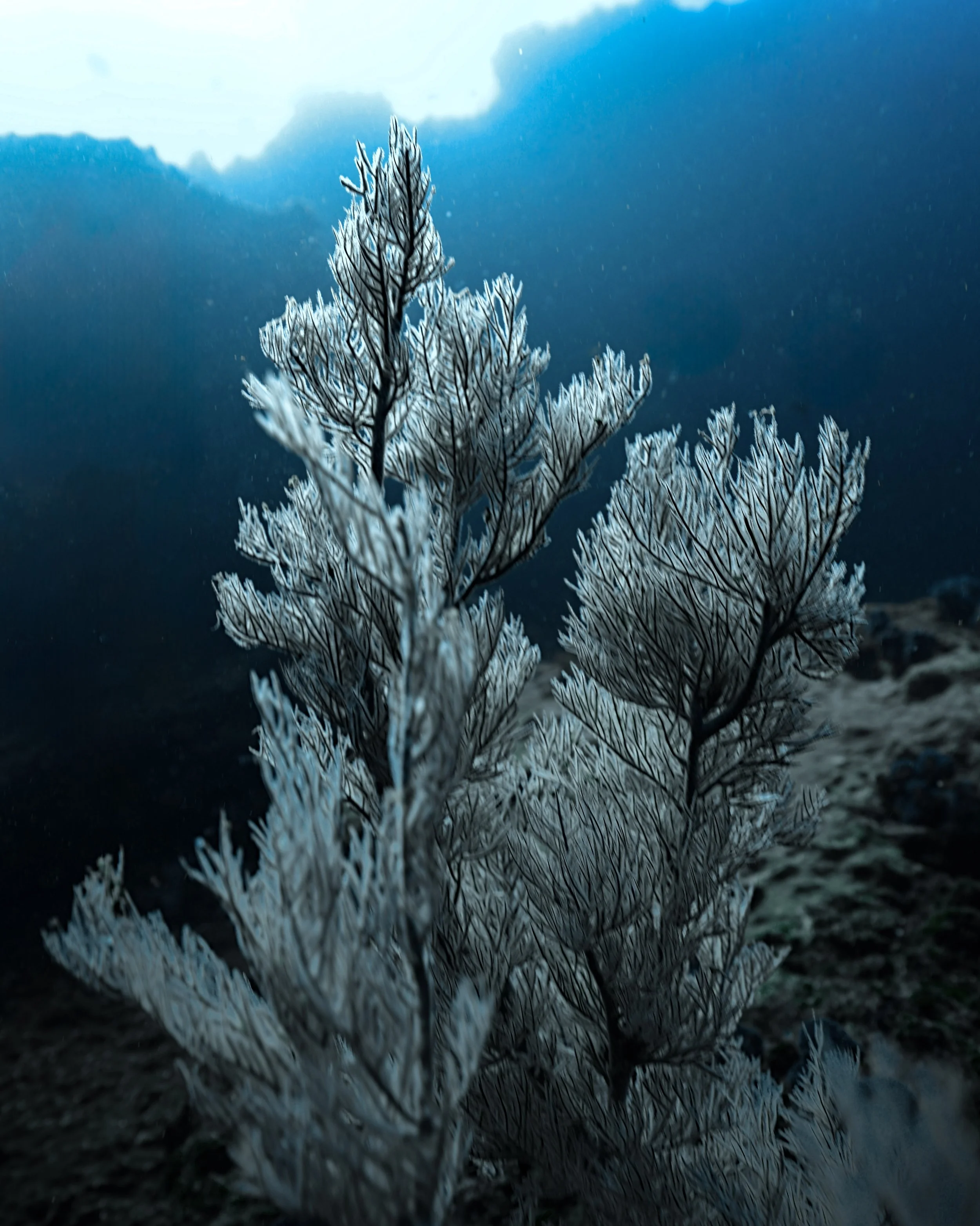
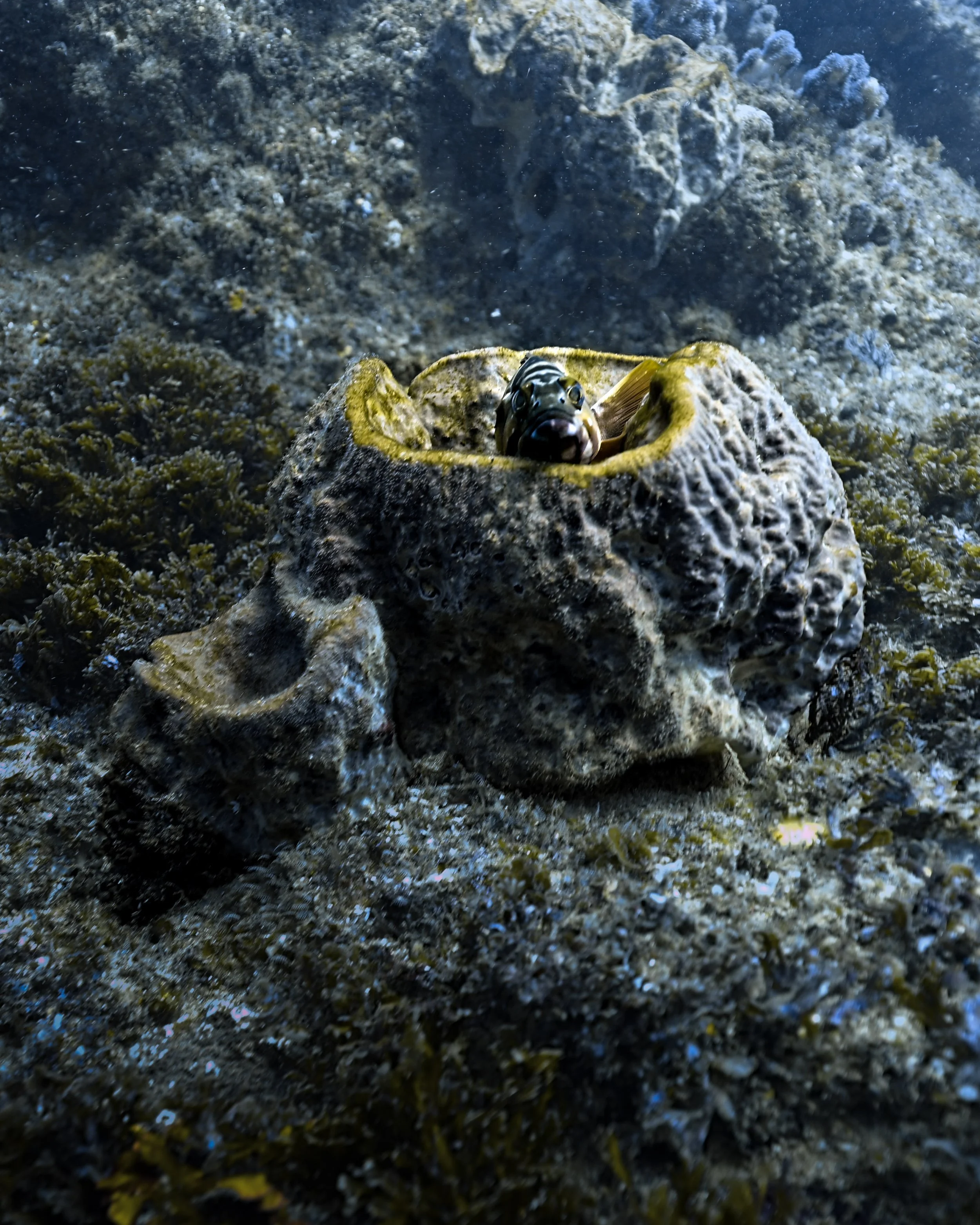
Aliwal Shoal is not made of coral. It is an ancient shoreline fossilised almost 80,000 years ago, lying on the inner edge of the warm Agulhas Current. The reef is subtropical and algal-dominated, and the water stays between 21 and 26 °C all year. Its life is arranged by light. The shallow, bright areas hold the most zooxanthellate hard corals, while the steep edges are characterised by the soft coral Eleutherobia aurea. That fits the general pattern of soft corals preferring less intense light. The region also supports endemic soft corals. Here the trade-off is reversed: east-coast waters are described as rich in biotic diversity, but poorer in nitrates, phosphates and plankton than the west.
Olbers, J., Celliers, L., & Schleyer, M. (2017). Zonation of benthic communities on the subtropical Aliwal Shoal, Durban, KwaZulu-Natal, South Africa. African Zoology, 44(1), 8–23
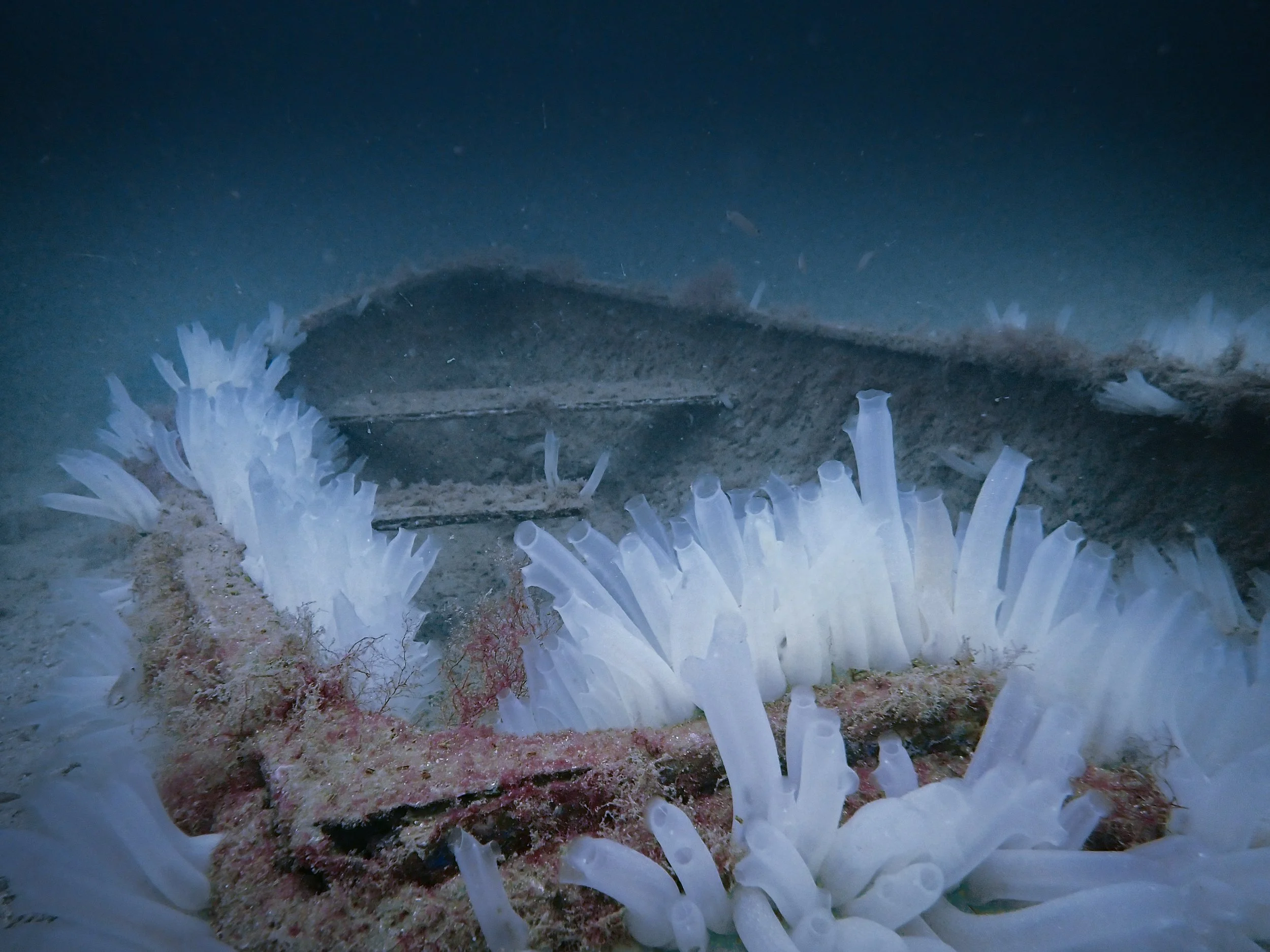
Nordic fjords
Sea Squirts: The Hidden Relatives of Vertebrates
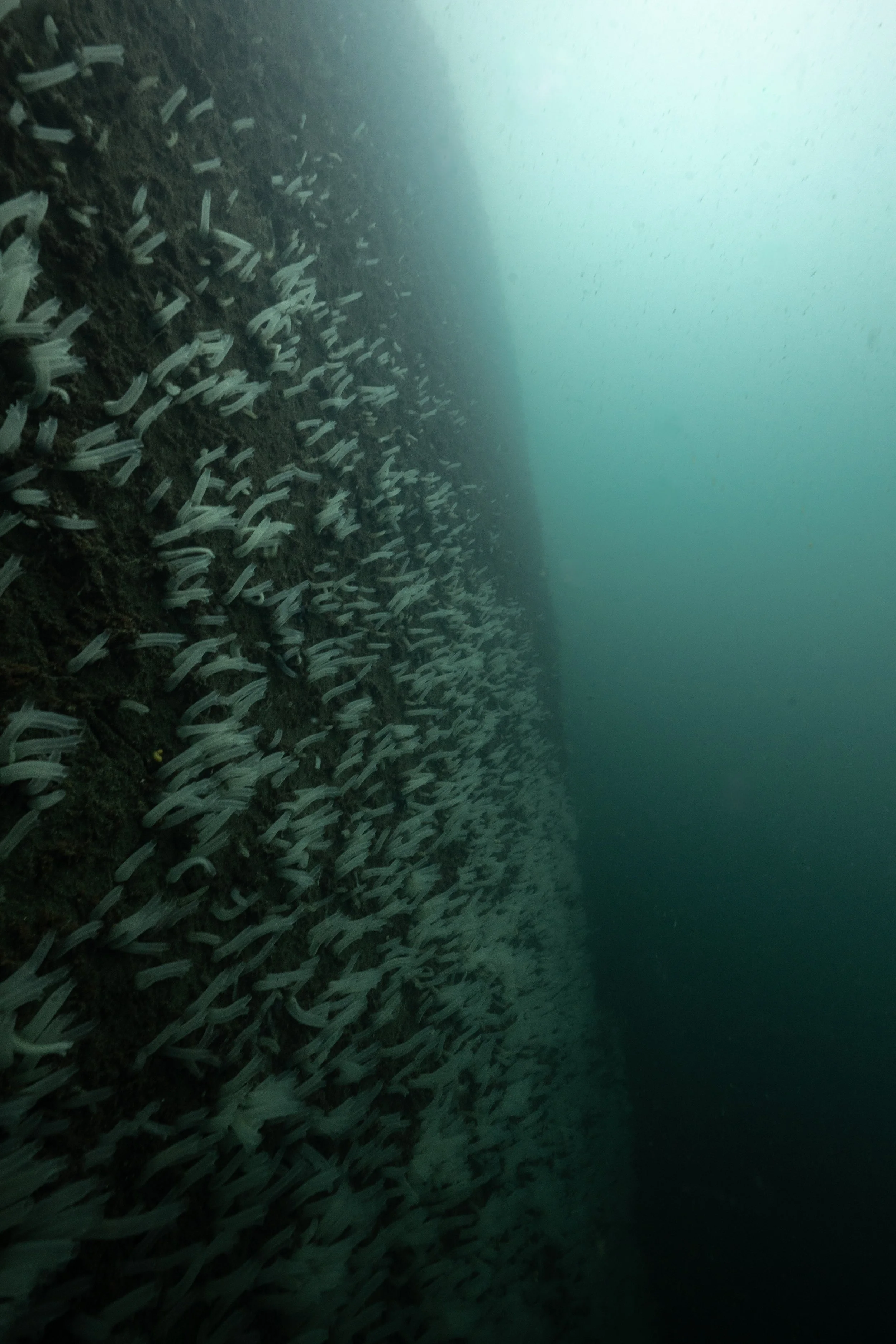
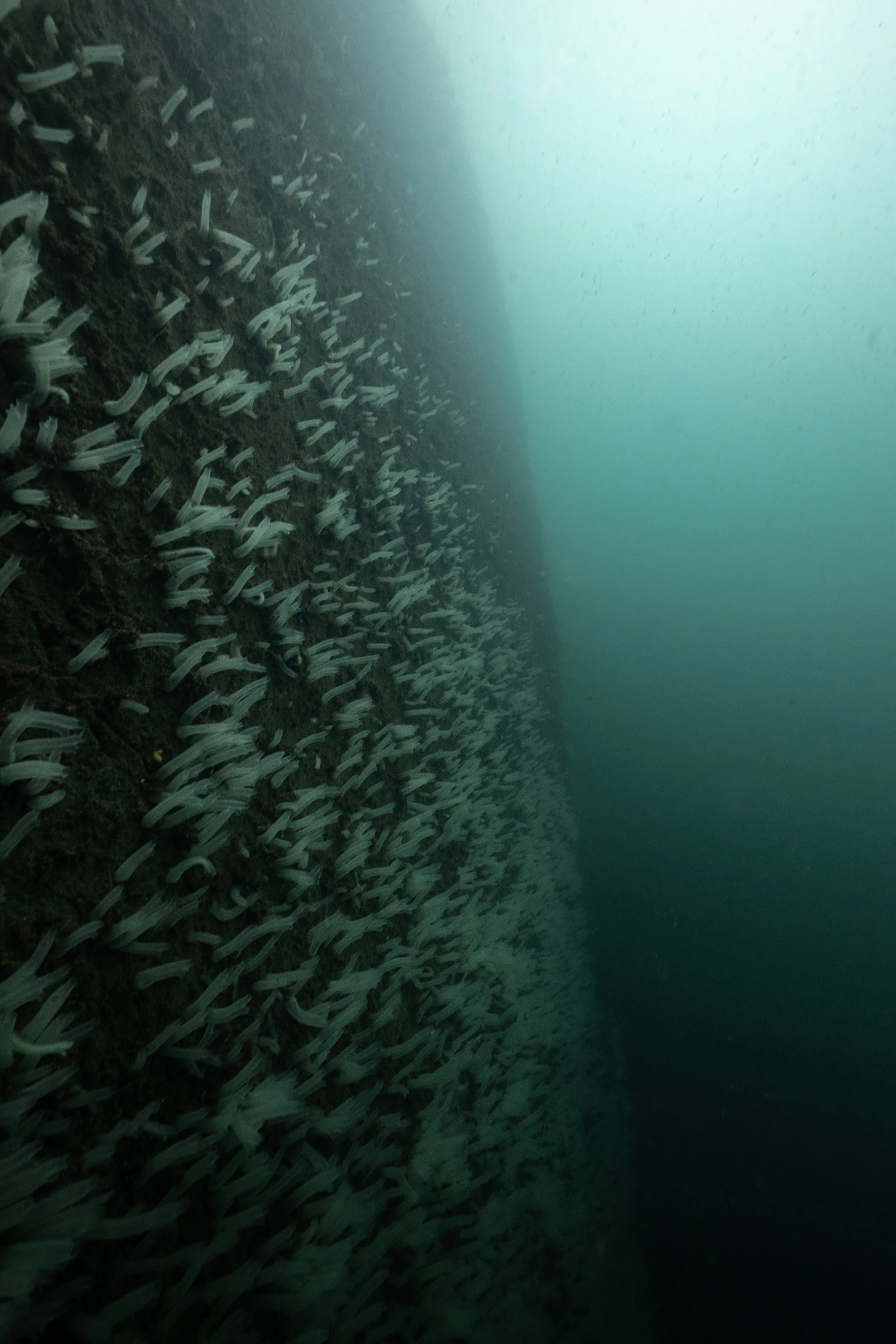
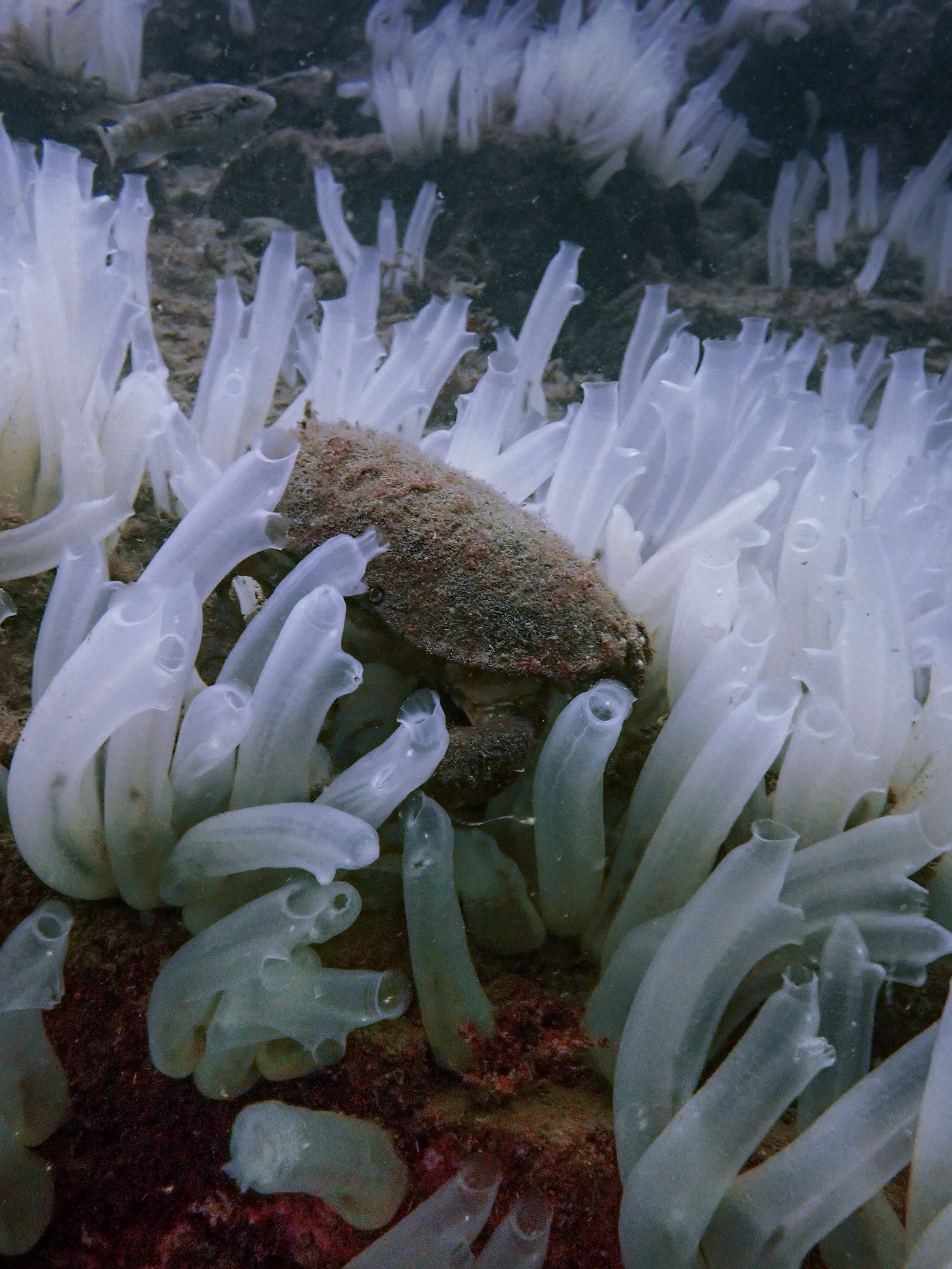
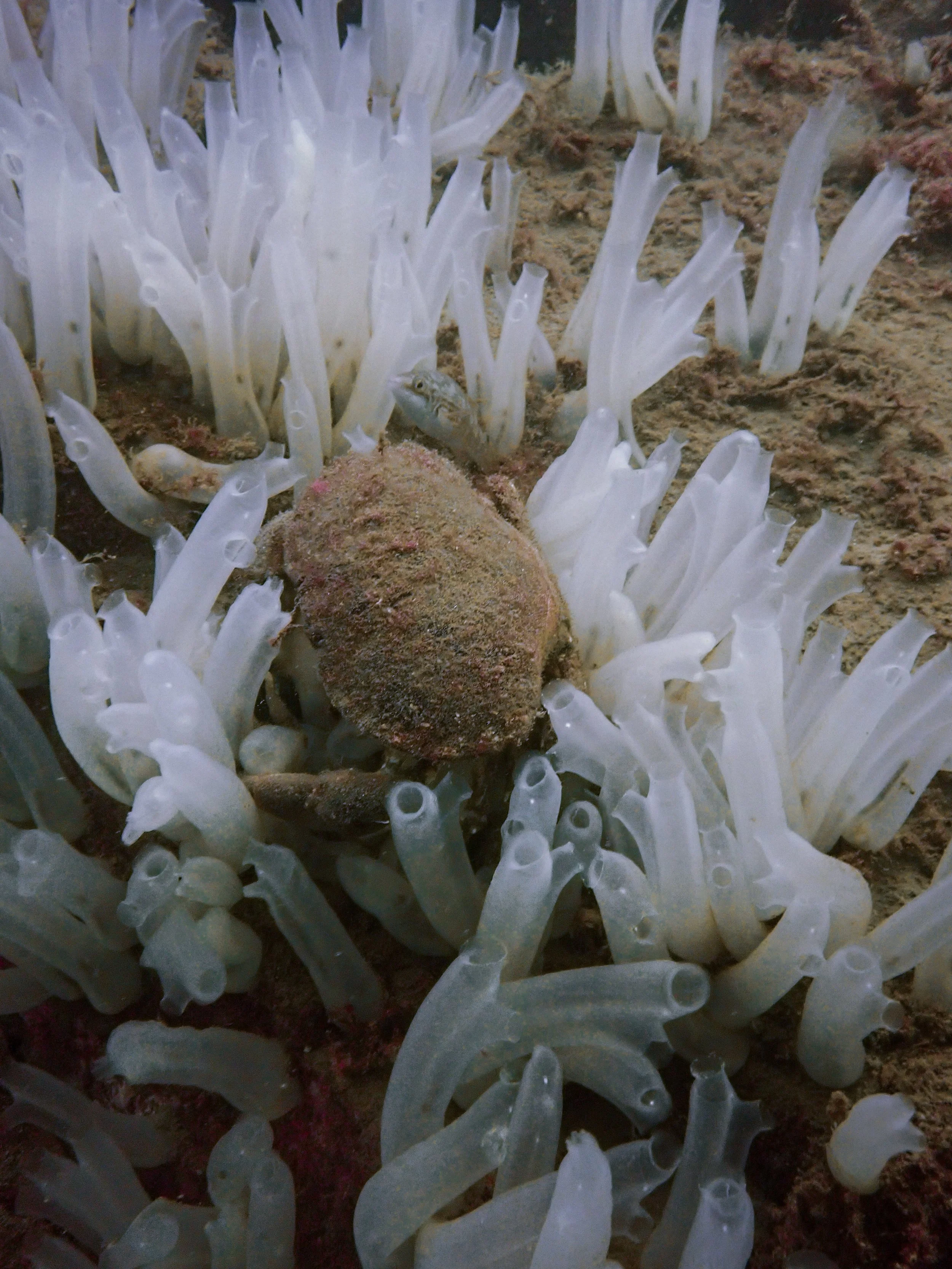
Among the rocks beneath the cold waters of Lysekil (Scandinavian Fjord), hundreds of translucent white bodies rise from the seabed like tiny underwater vases. Their soft, tubular forms sway gently in the current, each one anchored to the rock. At first glance, they seem almost too simple to be interesting. Yet these animals, known as sea squirts, conceal one of the most surprising evolutionary stories beneath the Scandinavian sea. They belong to the phylum Chordata, the same phylum as fish, birds and humans! As larvae, sea squirts resemble tiny tadpoles, equipped with a tail, a notochord and a dorsal nerve cord. These structures place them among the chordates and make them invaluable to evolutionary biologists investigating the origins of vertebrate body plans. But once a larva finds a suitable surface, it settles down and undergoes a remarkable transformation. The tail is lost, the swimming machinery disappears, and the animal becomes a stationary filter feeder. An organism that once moved through the water spends the rest of its life attached to a rock, pumping seawater through its body.
Sea squirts transfer organic matter from the water column to the seabed, contributing to coastal food webs and creating small living surfaces where other organisms can settle. Yet their influence is not always beneficial. In harbours and aquaculture facilities, sea squirts can grow densely on ropes, boat hulls, shellfish equipment and submerged structures. Some species spread readily through maritime traffic, competing with native organisms for space and food. The same filtering ability that makes them fascinating components of marine ecosystems can therefore become an expensive problem for coastal industries.
Their unusual biology has also made them valuable in the laboratory. Researchers study Ciona embryos to understand how genes control development, how nervous systems evolve and how complex animal body plans emerged. Tunicates also produce cellulose-like material in their outer covering, attracting scientific interest in biomaterials, although they are not currently a major industrial source of cellulosEmmerson
R. Wilson, et al., Ecological Review of the Ciona Species Complex, The Biological Bulletin, Volume 242, Number 2, 1 April 2022, Pages: 153 - 171
Matthew J Kourakis, William C Smith (2015), The Natural History of Model Organisms: An organismal perspective on C. intestinalis development, origins and diversification
Lysekil sits at the mouth of the Gullmar Fjord, Sweden's only true sill fjord, a fjord with a rocky threshold at its mouth. That threshold lies at only about 45 m, while the basin behind it drops to roughly 125 m, and the way water is exchanged with the Skagerrak has produced a rich and partly unique marine fauna. Many animals of the deep basin are found elsewhere only at great depth in the Skagerrak and in Arctic waters. In 1983 the fjord became Sweden's first marine conservation area.
Dead Man’s Fingers
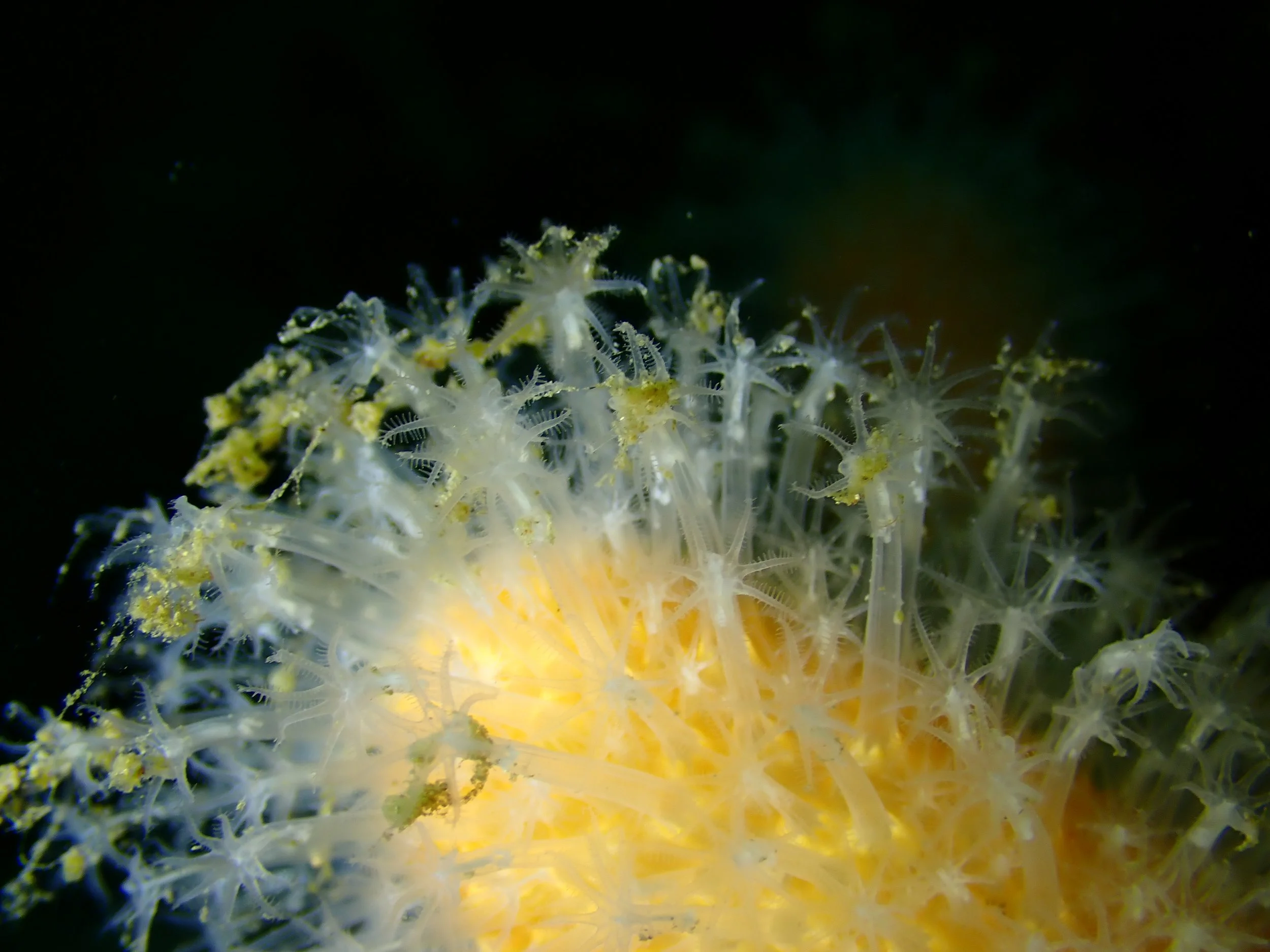
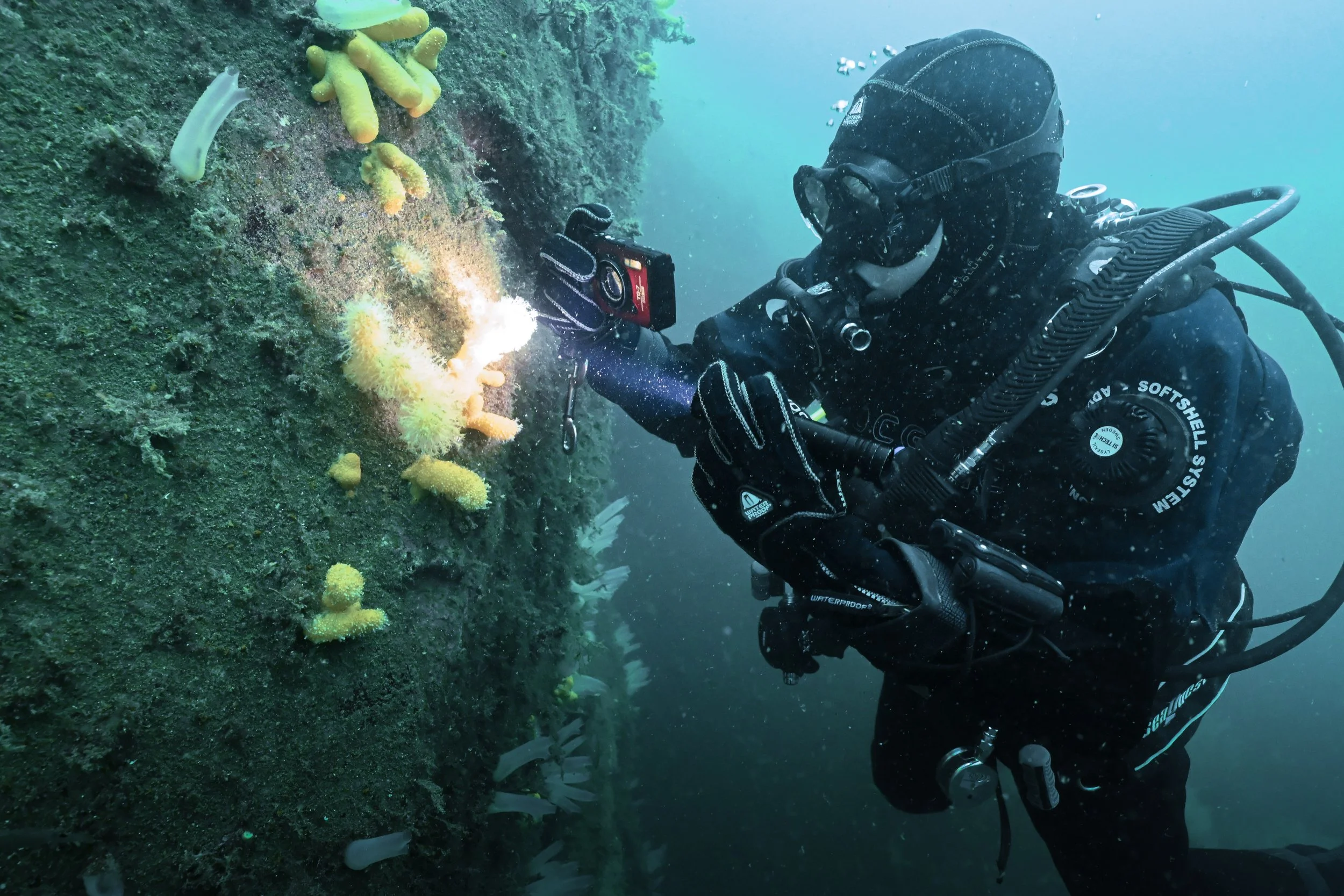
Clinging to the dark rock walls beneath the waters of Lysekil, pale fingers reach into the current. At first glance, they resemble delicate plants swaying in an underwater breeze. But these strange formations are not plants, nor are they a single animal. They are colonies of dead man’s fingers (Alcyonium digitatum), a soft coral native to the northeastern Atlantic.
Each fleshy lobe is part of a shared living structure, inhabited by hundreds of tiny polyps. When the polyps extend, their eight feathery tentacles transform the colony into a delicate white forest. These tentacles capture plankton and organic particles carried by the current, drawing energy from the water that flows past the rocky seabed. Unlike tropical reef-building corals, Alcyonium digitatum does not construct a massive limestone skeleton. Instead, its soft, fleshy body grows directly over hard surfaces, from submerged rocks to shipwrecks. It thrives in well-oxygenated waters where currents continually deliver food.
Its world extends far beyond the Swedish fjords. From the coast of Portugal to Norway and Iceland, and throughout the North Sea and around the British Isles, this coral is a familiar presence on the rocky seabeds of the northeastern Atlantic. Here, in the cold waters of Scandinavia, it becomes part of a complex underwater community that often goes unnoticed by those looking down from the surface.
Yet this seemingly modest organism has a role in shaping its environment. By filtering suspended food from the water, it transfers energy to the seabed. Its colonies add texture and complexity to otherwise bare rock, creating small habitats for other marine organisms. Even the coral itself becomes food for specialised predators, including the nudibranch Tritonia hombergii. Slow-growing and capable of living for decades, Alcyonium digitatum is a quiet witness to the changing life of the fjord. Its pale fingers may look motionless, but each colony is continuously interacting with the surrounding ecosystem.
Ghosts of the Scandinavian Fjords
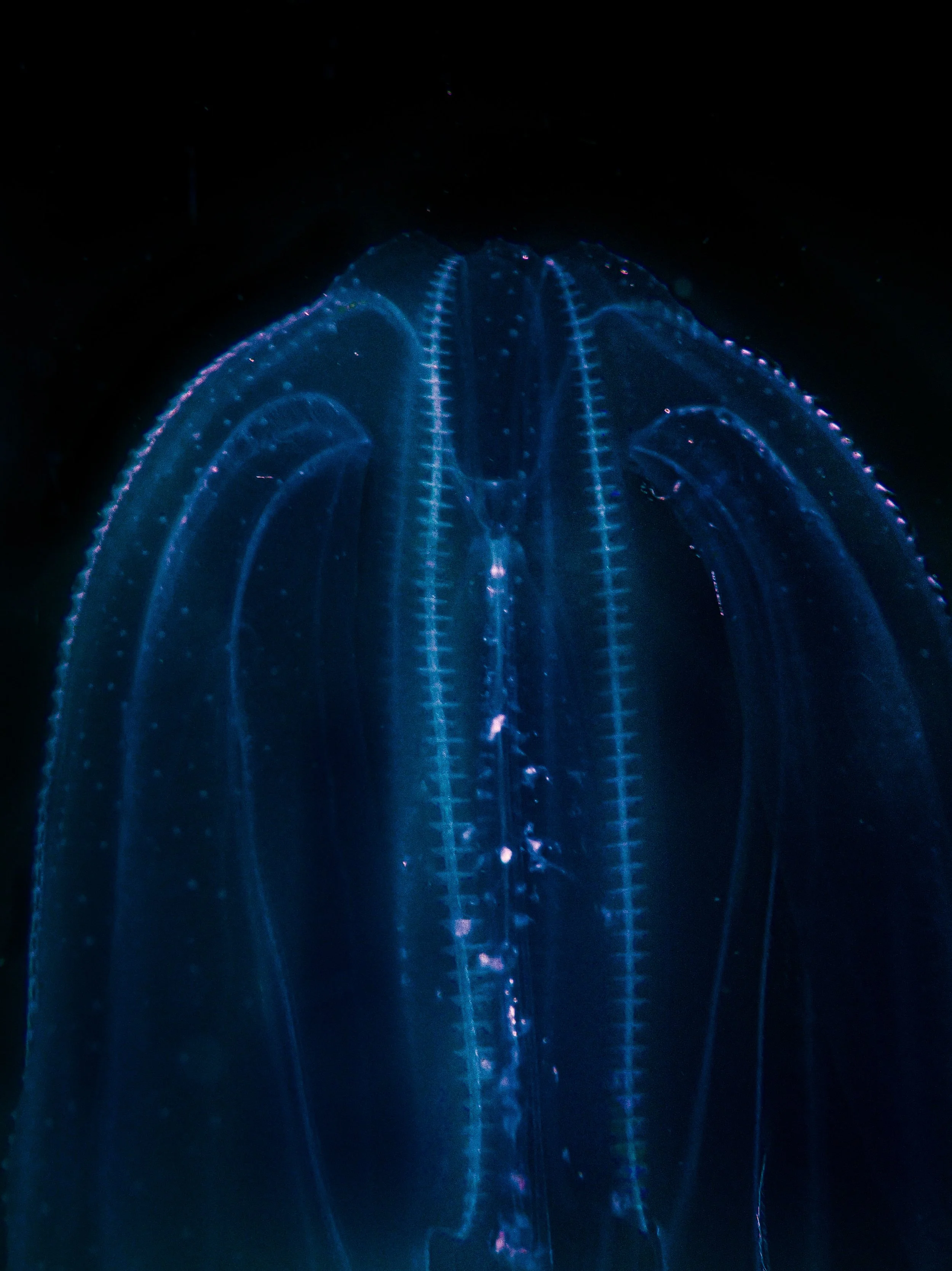
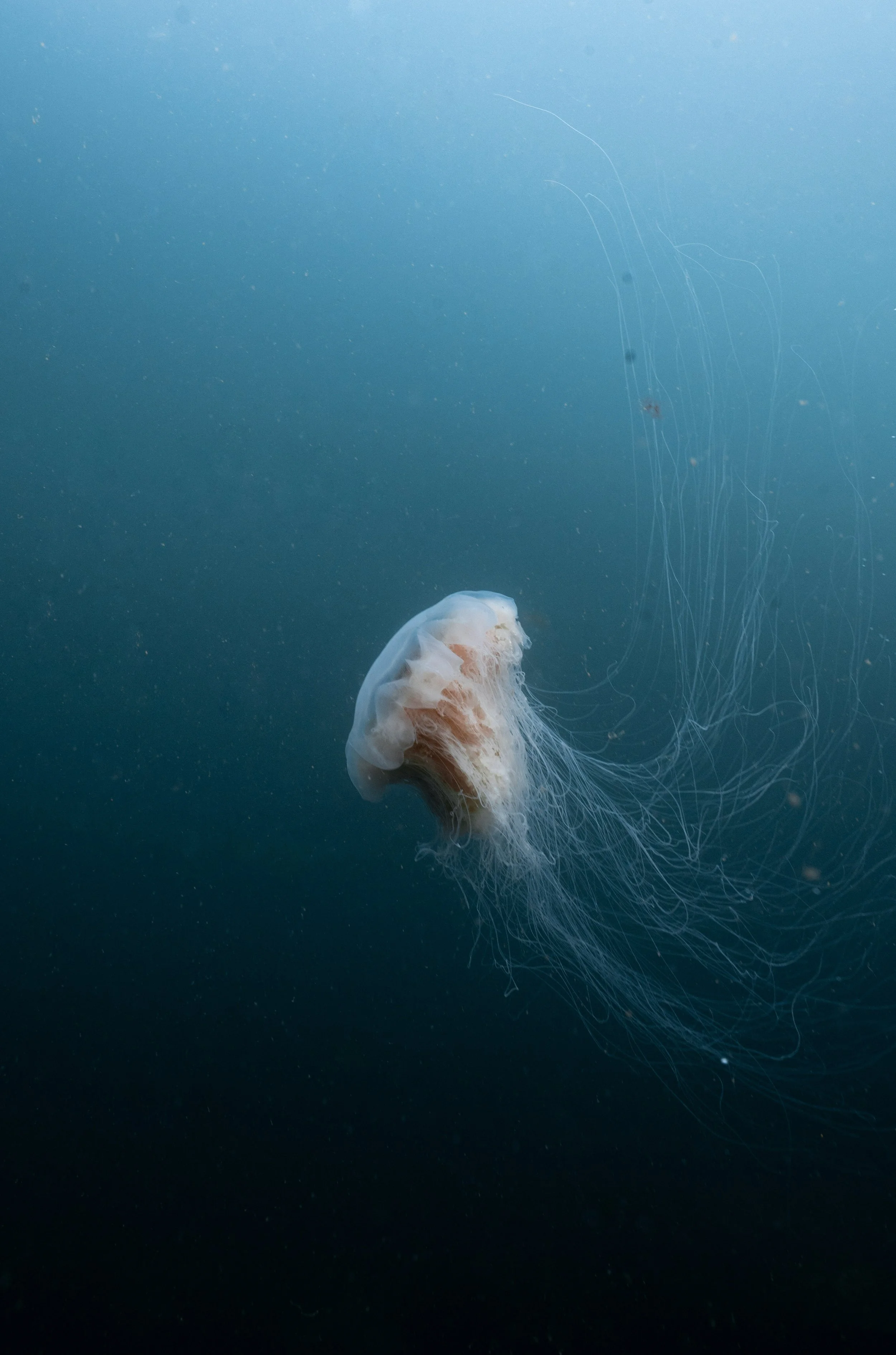
Beneath the dark waters of Lysekil, two gelatinous drifters reveal the extraordinary diversity of marine life. At first glance, both resemble jellyfish, but only one truly belongs to that group.
On the left, a comb jelly (Ctenophora), glides through the water on eight rows of microscopic cilia, scattering shimmering blue and rainbow-like colours. Despite its ghostly appearance, it is not a true jellyfish: instead of stinging cells, many comb jellies use microscopic adhesive cells to capture their prey. Ancient in evolutionary origin, these delicate predators are among the ocean's most unusual animals.
On the right, likely a lion's mane jellyfish (Cyanea capillata), drifts with a translucent bell and trailing tentacles that can deliver painful stings. Found throughout cold northern seas, it is a reminder that beauty in the ocean can conceal formidable defences.
Both inhabit the waters of the North Atlantic and Scandinavia, where currents carry them through a world of darkness, plankton and shifting light. Silent and fragile-looking, they are not merely mysterious shapes in the deep, but highly adapted predators playing their own part in the marine ecosystem.